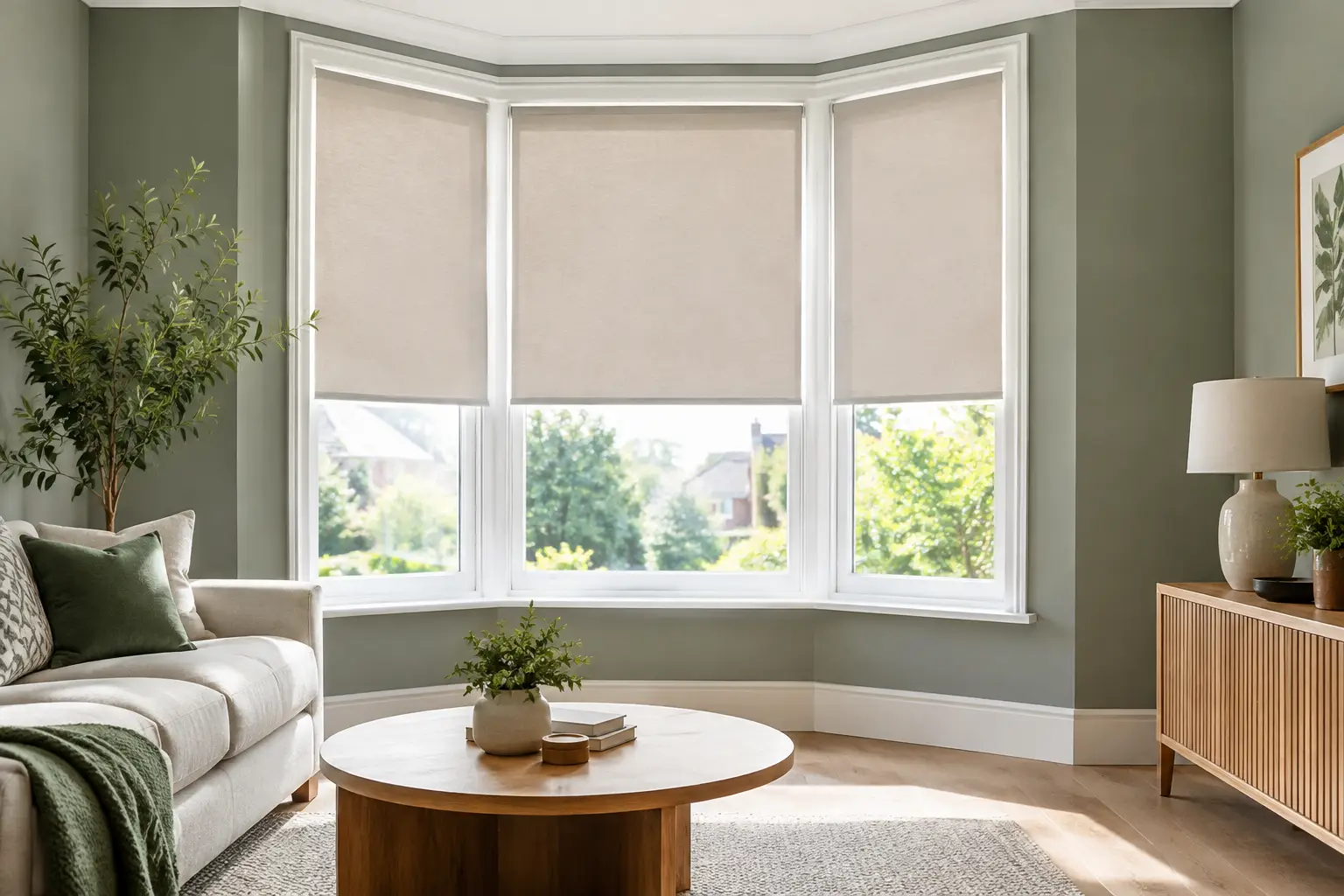
A bay window should make a room feel brighter, larger and more welcoming. Yet it can quickly become the part of the room that feels awkward to dress, particularly when privacy is limited, afternoon sun creates glare, or uneven window sections make standard-sized options look untidy. A Neath bay window blind makeover works best when every section is measured and planned as part of one complete design, rather than treated as three separate windows.
The right choice brings more than a fresh look. It gives you practical control over daylight, privacy and comfort while keeping the shape and character of the bay clear. For homes in Neath and across South Wales, made-to-measure fitting is often the difference between a bay window that looks almost right and one that feels properly finished.
Start with how you use the room
Before choosing a colour or blind style, consider what the bay window needs to do each day. A front-facing lounge may need privacy from passers-by without making the room dark. A dining area might need flexible light control at different times of day. In a bedroom, blackout performance can matter far more than maintaining a bright view in the morning.
This is why a single answer rarely suits every bay window. A clean, light-coloured fabric may be ideal for a shaded sitting room, but it may not give enough coverage where cars, streetlights or low winter sun are an issue. Similarly, a darker finish can look striking, though it may make a smaller bay feel more enclosed.
Think about where people sit, where screens are positioned and how the sunlight moves through the room. These small details help determine whether you need individual control at each window, a more insulating material, or a solution that sits neatly within the frame.
Why bay windows need careful measuring
Bay windows are defined by their angles. Even two apparently similar properties can have different returns, sill depths, handle positions and wall lines. A blind that is just a few millimetres too wide may catch on a neighbouring section, leave an awkward gap or prevent the blind from operating smoothly.
Professional measuring checks far more than the width and drop. It accounts for the angle between each window, the space available above the frame, any inward-opening windows, radiators below, and how far the blind projects when raised or lowered. This is particularly valuable with shallow bays, where every fitting decision is visible.
A made-to-measure approach also creates a more balanced finish. The blind lines can be aligned across the bay, with consistent gaps and a proportion that suits the window rather than a standard product size. It is a detail people may not notice immediately, but they will see the difference in the finished room.
Choosing blinds for a Neath bay window makeover
The best product depends on the window layout and your priorities. There is no need to choose a style simply because it is popular elsewhere in the home. Bay windows often benefit from a tailored choice that respects both the frame and the room.
Roller blinds for a simple, modern finish
Roller blinds are a strong option for bays made up of clear, separate window sections. Their slim profile keeps the window looking uncluttered, and they are available in a wide range of fabrics, colours and opacity levels. A light-filtering fabric can soften bright daylight, while blackout fabric is a practical choice for bedrooms or rooms affected by evening light.
They are especially effective when you want a straightforward, contemporary look. However, it is worth considering how much privacy is needed when the blind is raised. If the room faces a busy pavement or neighbouring properties, you may prefer a style that allows more adjustable coverage during the day.
Venetian blinds for flexible light control
Venetian blinds give you the ability to tilt the slats as well as raise the blind. That makes them useful in living rooms and home offices, where you may want to reduce glare without losing all natural light. Aluminium Venetians provide a crisp, practical finish, while wooden blinds bring warmth and texture to a bay.
Wooden blinds can be particularly effective in larger bays with good depth, but they are heavier than fabric options and need appropriate fixing. The available space above the window and the weight of the finished blind should be checked carefully before choosing them.
Vertical blinds for wider or angled bays
Vertical blinds remain a sensible option where the bay is wide, unusually shaped or needs straightforward control over changing sunlight. The louvres can be angled for privacy and light adjustment, and they suit properties where a practical, durable finish is the priority.
For some homeowners, the look of vertical blinds is less suited to a traditional bay. That is a matter of personal taste, which is why seeing fabric and colour samples in the room is useful before making a decision.
Perfect Fit and frame-friendly options
Where the window design allows it, Perfect Fit blinds sit neatly within the frame and move with the window or door. They can be a helpful choice for opening sections and rooms where a neat, integrated appearance is wanted. They also avoid drilling into the frame itself.
Not every bay window is suitable for this option, so it should be assessed during measuring. The bead depth and frame type affect whether it can be fitted securely and operate as intended.
Make colour and texture work with the bay
A bay window is naturally a focal point, so its blinds influence the whole room. Neutral shades such as soft whites, warm greys and muted natural tones are reliable choices when you want the window to blend in and keep the space feeling open. They work particularly well where the room already has patterned furnishings or strong wall colours.
A deeper colour can give the bay more presence, especially in a larger lounge or dining room. The trade-off is that stronger shades draw the eye to the window even when the blinds are down. If you are unsure, viewing samples against the wall colour in both daylight and evening light is far more reliable than choosing from a small image.
Texture matters too. A woven fabric can soften a formal room, while smooth materials and slim slats lend a cleaner, more contemporary appearance. The aim is not to make the blind the loudest feature in the room. It is to make the entire bay feel considered.
Plan for privacy, glare and warmth
Bay windows bring in generous daylight, but that can also mean glare on televisions and laptops, fading on furniture, and a room that feels exposed after dark. The right blind gives you control without forcing you to block the window all day.
For a street-facing bay, adjustable slats can be useful because they let daylight enter while reducing direct views into the room. Where a room gets strong low sun, a well-chosen roller fabric can take the edge off the brightness. In bedrooms, blackout materials are the clearest answer when better sleep is the priority.
There is also a comfort benefit in colder months. A correctly fitted blind adds another layer at the glass, helping the room feel less exposed and more comfortable. It will not replace insulation or address draughty frames, but it can make a noticeable difference in a seating area close to the window.
A smooth route from idea to fitting
A successful makeover should not require you to guess at measurements or work out complicated brackets. The process is simple: arrange a home consultation, discuss how you use the room and review suitable styles; the windows are then measured accurately, a clear quotation is provided, and the chosen blinds are made for your bay.
Once ready, professional fitting ensures each blind is aligned, secure and easy to operate. You should also be shown how to use and care for the finished blinds. This is especially reassuring with bay windows, where installation involves multiple sections that need to work together visually.
Premier Welsh Blinds provides this full service, from free measuring and product guidance to insured fitting and guarantees, helping homeowners avoid the uncertainty of a self-measured purchase.
Keep the finished look looking its best
Most blinds only need regular, gentle care. Light dusting or a soft brush attachment helps prevent build-up, while fabric blinds should be cleaned according to their material guidance rather than scrubbed with household products. For Venetian blinds, closing the slats in one direction and wiping gently before reversing them makes cleaning easier.
If a blind begins catching, hanging unevenly or operating stiffly, avoid forcing it. A quick adjustment is often all that is needed, and dealing with it early helps protect the mechanism.
A bay window deserves a solution designed around its shape, not a compromise chosen from a shelf. Book a measuring appointment when you are ready, and use the visit to see what will genuinely suit your room, your privacy needs and the way you live at home.