A window that is slightly wider at the sill than at the top can make an off-the-shelf blind look untidy before it has even been used. This made to measure blinds guide explains why accurate sizing matters, how to choose a style that suits the room, and what to expect when your blinds are professionally measured and fitted.
Made-to-measure blinds are built for your actual window or door recess, rather than made to fit a standard size. That means a closer fit, smoother operation and a finished look that feels part of the room. It also removes much of the uncertainty around measuring, ordering and fitting the wrong product.
Made to measure blinds guide: begin with how you use the room
The best blind is not always the one you first like the look of. Start with the practical job it needs to do. A bedroom may need stronger light reduction for early mornings and lighter summer evenings. A street-facing lounge may need daytime privacy without making the room feel closed in. In a kitchen or bathroom, easy-clean, moisture-resistant materials are often a sensible priority.
Think about when the sun reaches the window as well. A south-facing conservatory or garden room can become uncomfortable at certain times of day, while a home office may need controlled light to reduce glare on a screen. For patio doors and wide openings, the way people move in and out of the room matters just as much as appearance.
A good consultation turns these everyday details into a practical choice. It is also the time to mention anything unusual, such as a deep window sill, handles that project into the recess, a skylight, or a door that needs to open freely.
Choosing the right blind style
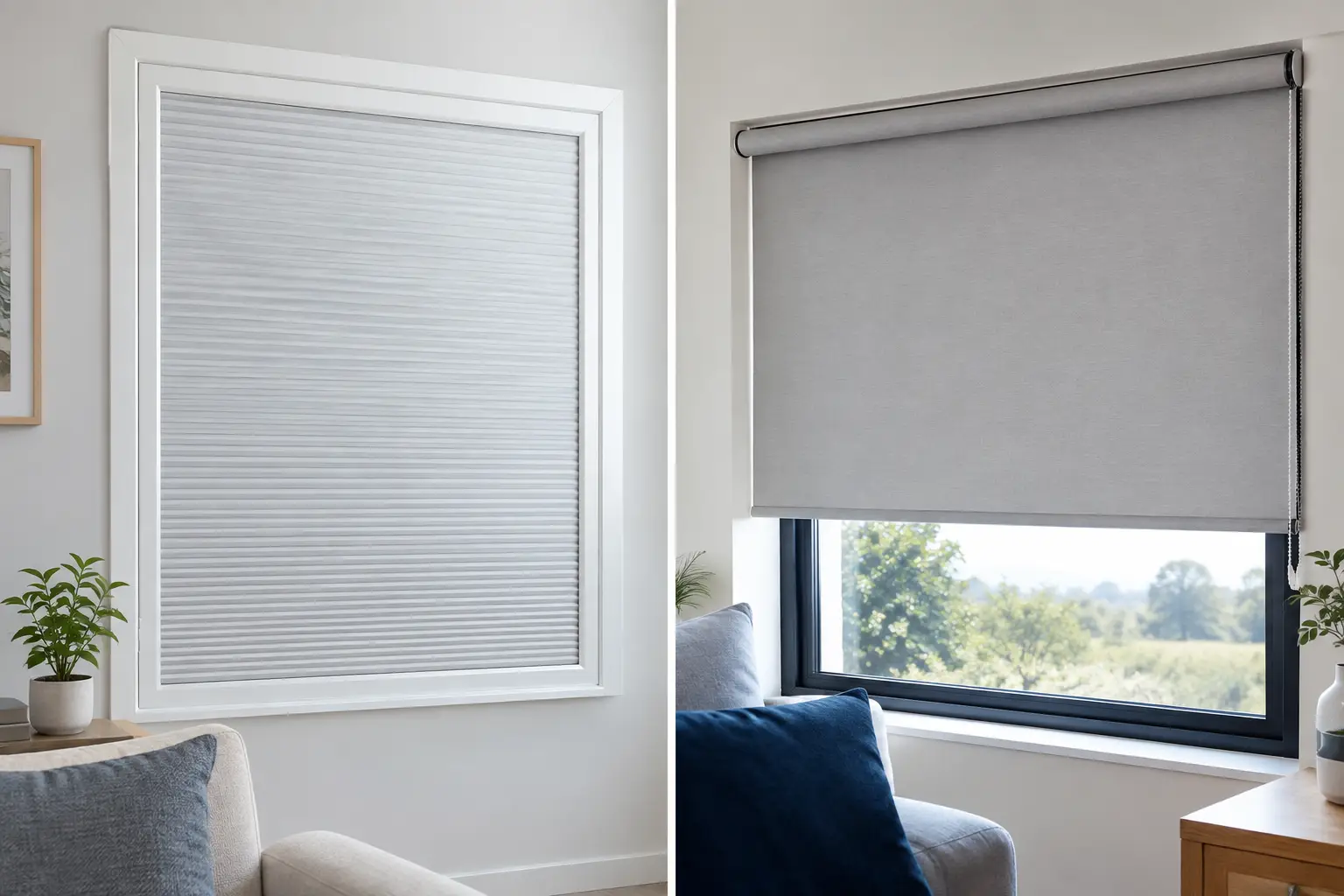
Each type of blind has its strengths, so there is rarely one answer for every home. Roller blinds give a clean, simple finish and work well in many rooms. They are available in a wide choice of fabrics, including blackout options where better darkness is needed.
Venetian blinds offer flexible control over privacy and daylight. By adjusting the slats, you can soften direct sunshine while still allowing natural light into the room. They suit kitchens, bathrooms and living spaces particularly well, although they do need occasional dusting between the slats.
Vertical blinds are a practical option for larger windows, patio doors and office spaces. Their individual louvres can be tilted for privacy and moved aside when you want a clearer view or access through a doorway. For some homeowners, they are the most useful choice for broad glazed areas, rather than the most decorative one.
Wooden blinds bring warmth and character to lounges, dining rooms and bedrooms. They can make a strong design feature, but the depth of the blind and the weight of the material should be considered, especially on very large windows. Faux-wood alternatives can offer a similar appearance where moisture resistance is more important.
Perfect Fit blinds are designed to sit neatly within many uPVC window and door frames, without drilling into the frame. They are a popular choice for conservatories and doors because the blind moves with the window or door. Velux blinds are purpose-made for roof windows, helping manage daylight, privacy and heat in loft rooms or extensions.
Shutters are a longer-term window covering choice that can add a more structured, fitted appearance. They offer excellent control over light and privacy, but they are usually a larger investment than a standard blind. The right decision depends on your budget, the room and the look you want to achieve.
Why professional measuring changes the result
Windows are not always square, even in newer properties. A few millimetres can affect whether a blind sits correctly, clears handles and opens without catching. Recess depth, tile edges, window vents and uneven plasterwork can all influence the measurements and fixing method.
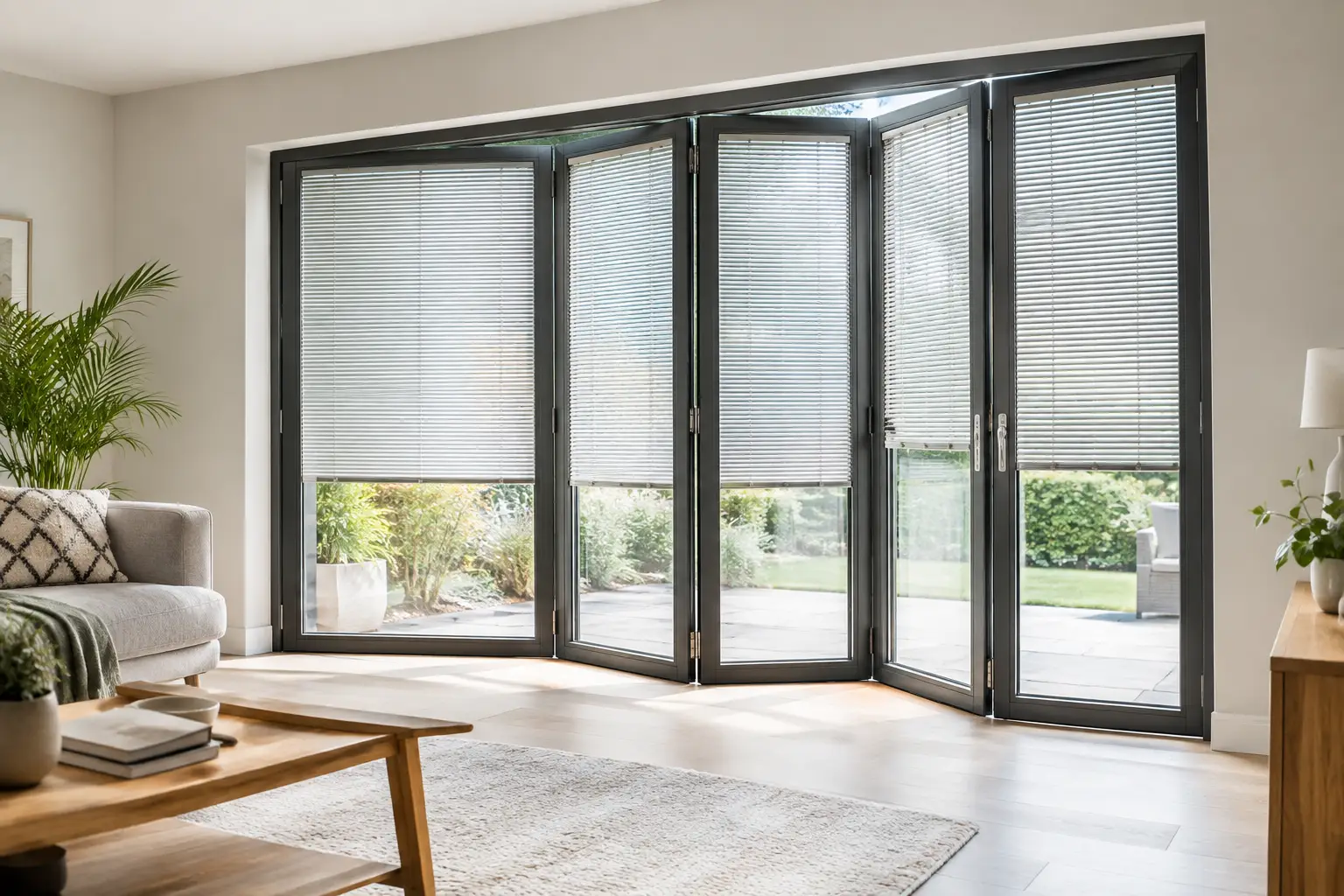
Professional measuring is about more than taking width and drop. The fitter will assess whether the blind should sit inside or outside the recess, where brackets can be fixed securely, and how the finished product will operate in daily use. This is particularly valuable for bays, large windows, roof windows, bifold-style doors and conservatories.
Choosing a recess fitting can create a neat, contained finish where there is enough depth. An exact fitting outside the recess may be better when you want to cover more of the window area or reduce light around the edges. Neither is automatically better – it depends on the window and the outcome you want.
Free measuring also gives you the chance to see samples in your own light. A colour that looks warm in a showroom can appear cooler at home, while a fabric that seems light in the hand may provide more privacy than expected once fitted to the window.
Light control, privacy and blackout: know the difference
Many people ask for blackout blinds when what they really need is improved privacy or less glare. Blackout fabric can significantly reduce light passing through the material, making it useful in bedrooms, nurseries, media rooms and spaces with strong early sunlight. However, some light can still enter around the sides of a blind depending on the fitting and the window shape.
If maximum darkness is the aim, explain this during the measure. The blind style, position and potential side gaps all need to be considered together. In other rooms, a dim-out fabric or adjustable slats may give a better balance between privacy and daylight.
For homes overlooked by neighbours or facing a busy road, privacy during the day and at night can be different requirements. A blind that prevents people seeing in after dark may still allow views in under certain daytime lighting conditions. Discussing when privacy is most needed helps avoid choosing purely by colour or fabric pattern.
What happens from consultation to fitting
A straightforward service should make the process easier, not give you more decisions to chase. At the consultation, you can talk through the room, view suitable materials and receive advice based on your windows and priorities. Measurements are taken accurately, then a clear quotation is prepared for the chosen products.
Once you are happy to proceed, your blinds are made to your agreed specification. When they are ready, a fitting appointment is arranged. Professional fitting includes securing the blinds carefully, checking their operation and leaving the area clean and tidy. You should also be shown how to raise, lower, tilt or operate the blinds, along with simple care guidance.
For customers across Neath, Swansea, Port Talbot, Bridgend and Ammanford, a local supply-and-fit service can be particularly helpful when there are several windows to coordinate or a property has awkward openings. Premier Welsh Blinds handles the full journey, from free measuring through to insured installation and guidance once the work is complete.
Looking after your new blinds
Most blinds need only simple, regular care. A soft duster, microfibre cloth or vacuum cleaner brush attachment can remove day-to-day dust. Follow the advice given for your particular material, as some fabrics respond best to gentle spot cleaning while slatted blinds may need individual cleaning.
Avoid pulling cords or chains sharply, and keep operating parts clear of furniture that may catch them. If a blind becomes difficult to use, it is better to ask for advice than force the mechanism. Small issues are often easier to sort out before they affect the blind’s alignment or fittings.
The most successful choice is one that works quietly in the background every day: it gives you the right light, the privacy you need and a finish that suits your home. Take a little time at the measuring stage, and your windows will reward you for years.