Bifold doors earn their place in a home by opening up a room to the garden, patio or balcony. The challenge is keeping that open, light-filled feeling while still having privacy, shade and control over glare. To choose blinds for bifold doors well, start with how you use the doors every day, rather than choosing a style on appearance alone.
The right blind should work with the folding panels, not get in their way. It should be easy to operate, sit neatly when the doors are open and give the level of coverage you need when the glass is closed. Made-to-measure fitting matters here, as bifold doors rarely suit a one-size-fits-all approach.
Start with how your bifold doors are used
Think about when the doors are open and when they are usually shut. A kitchen or family room that opens onto the garden throughout summer needs a solution that stacks away tidily and allows easy access. A garden room used all year may need stronger glare reduction, privacy and help with keeping the room comfortable.
Also consider which direction the doors face. South- and west-facing glass can bring intense afternoon sun, making a room uncomfortably bright or causing reflections on televisions and screens. Doors overlooked by neighbouring properties may need adjustable privacy in the evening, without making the room feel closed off during the day.
The number of panels and the way they fold are equally important. Some doors fold to one side, while others split from the centre. The opening direction, handle positions and frame depth all affect what can be fitted and where it can sit. This is why a professional measure before ordering is worthwhile.
Choose blinds for bifold doors by fitting position
There are two main approaches: blinds fitted to the individual door panels, or a blind system fitted above the full door opening. Both can look excellent, but they behave differently.
Blinds fitted to each door panel
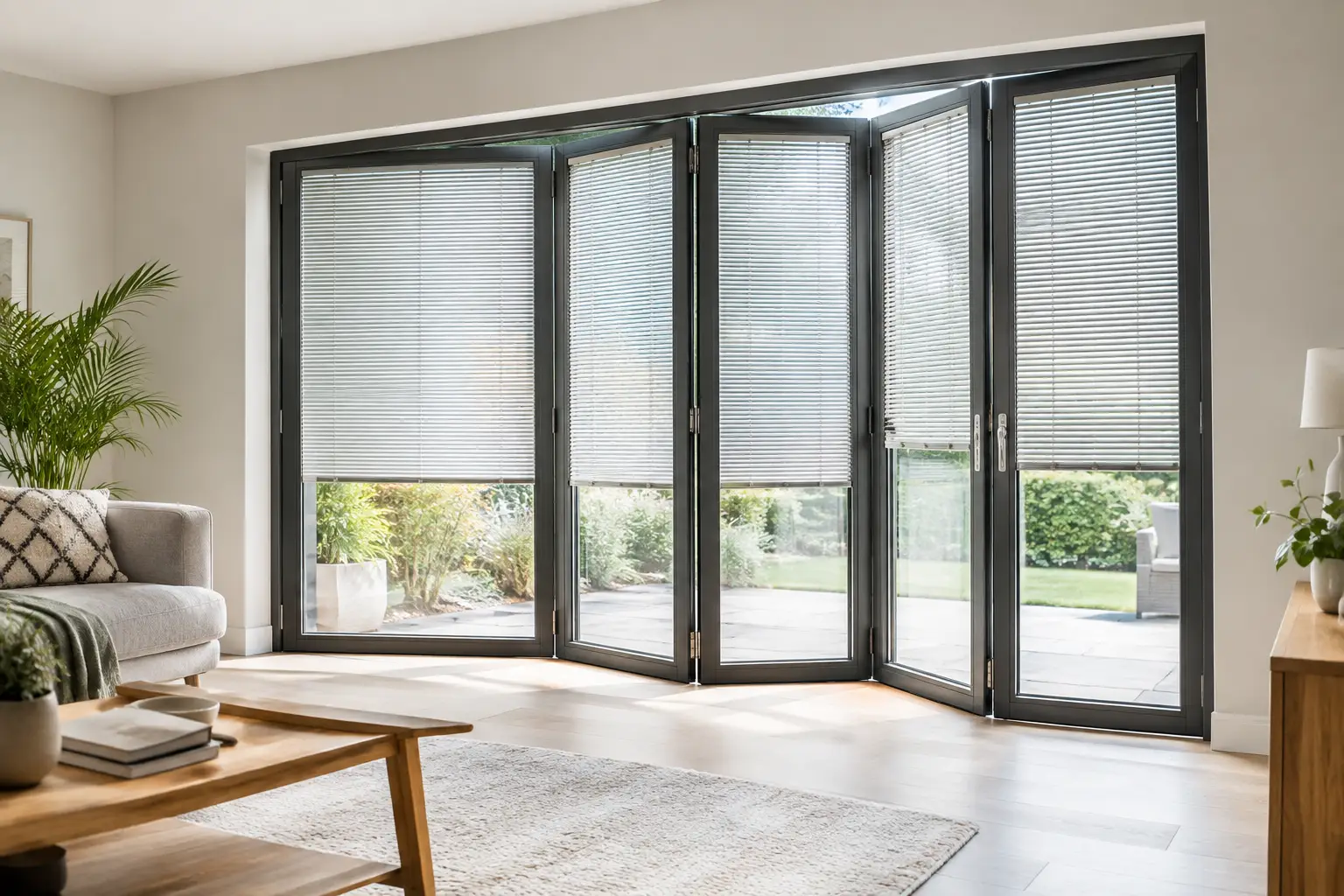
Perfect Fit blinds are designed to sit within or closely against the glazed section of a door, without drilling into the frame. Because each blind moves with its own panel, you can fold and open the doors without having to raise every blind first. They create a neat, integrated look and are particularly practical where the doors are used often.
This option is usually best for homeowners who want the blinds to feel part of the doors rather than an additional feature across the opening. Depending on the frame and glass bead, available styles may include pleated or Venetian options. A survey will confirm whether the system is suitable for your particular doors.
The trade-off is that panel-fitted blinds divide the coverage across each glazed section. Some people prefer the clean, structured appearance; others want a single blind treatment across the whole expanse of glass.
Blinds fitted above the opening
Vertical blinds and certain roller systems can be fitted above the bifold door recess or to the ceiling. This gives one continuous covering over the full width of the doors. When drawn back, the blind stacks to one or both sides, leaving the opening clear.
Vertical blinds are a useful choice for wide openings because their louvres can be tilted to soften sunlight while retaining a view outside. They can also be drawn fully across for privacy. They need enough space above the doors for a secure track and enough room at the stacking side so the blind does not obstruct the opening.
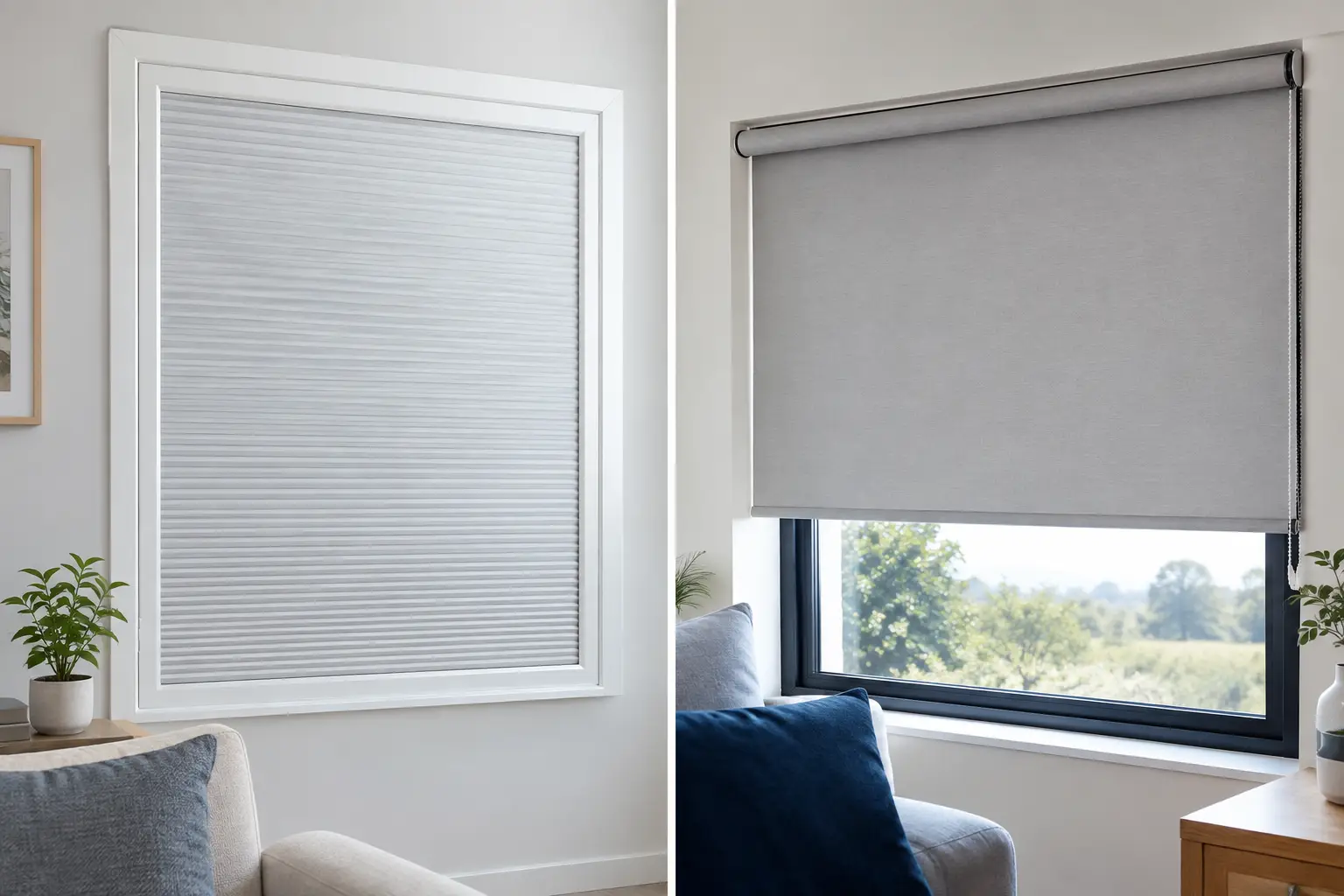
A roller blind can provide a simple, contemporary finish on bifold doors that are mainly kept closed, particularly where the doors form a fixed-looking glazed wall. However, it must be raised before opening the panels. For homes where the doors are used constantly, this can soon become inconvenient.
Match the blind to the result you want
Most customers are balancing several needs at once. A blind that gives excellent privacy may reduce daylight more than you would like, while a light-filtering fabric may look soft and welcoming but offer little protection after dark. Being clear about your priority makes choosing much easier.
For adjustable light and privacy, Venetian blinds are a strong option. Tilting the slats lets you direct sunlight away from the room and limit overlooking without completely blocking natural light. Aluminium Venetians are also practical in kitchens, where they are easy to wipe clean. Wooden blinds bring warmth and texture, although their weight and fitting requirements need careful consideration on wide doors.
For gentle daylight and a clean appearance, pleated or light-filtering blinds can work beautifully on individual panels. Their compact profile suits modern door frames and they fold away neatly when raised. They are often a popular choice where homeowners want privacy without making the room feel heavy.
For bedrooms, media rooms or spaces affected by strong sun, blackout fabrics can make a real difference. Bear in mind that blackout refers to the fabric itself. With blinds, small gaps around the edges may still allow some light into the room. The fitting position and frame shape will determine how much light can be reduced in practice.
Do not overlook operation and safety
Bifold doors are a moving part of the home, so the blind controls should be simple to reach and easy to use. A well-positioned control keeps cords and chains away from handles and avoids the need to stretch over furniture. For many homes, motorised blinds are worth considering on large or difficult-to-reach openings, especially when glare changes quickly through the day.
If there are young children or pets in the household, child-safe control options should be part of the discussion from the start. Professionally fitted systems can be arranged with appropriate safety devices and a tidy finish, rather than leaving loose controls around a busy doorway.
It is also sensible to think about cleaning. Bifold doors often lead straight to the garden, so they can be exposed to fingerprints, cooking residue, dust and the occasional muddy splash. Easy-care materials and a design that gives access to the glass will make everyday maintenance far less of a chore.
Measure for movement, not just width and height
The biggest mistake with bifold door blinds is measuring only the glass or the opening, without accounting for how everything moves. Handles may project, panels may fold inward or outward, and the doors need clearance at the top and sides. Even a small miscalculation can mean a blind catches, rubs or prevents a panel from opening fully.
A proper survey checks the frame, glass beads, handles, hinge positions, recess depth and stacking arrangement. It also considers whether the doors need to open independently. For example, you may regularly use one traffic door for quick access to the garden, while opening the whole set only when entertaining. The blind arrangement should make that routine easy.
This is where bespoke products offer real value. Instead of trying to adapt standard sizes to a complex opening, each blind can be made for the dimensions and layout of your doors. The finished result is more likely to operate smoothly and look balanced across the full width.
Consider colour, texture and the view beyond
Bifold doors are often a focal point, so the blind colour has a noticeable effect on the room. White, soft grey and warm neutral shades keep the frame looking light and unobtrusive. They are a sensible choice where the garden view is the main feature.
Darker shades can give a more defined, contemporary look and may be useful for controlling glare, but they can appear stronger across a large area of glass. Textured fabrics and wood-effect finishes add character, particularly in rooms with natural flooring or furniture. The best choice depends on whether you want the blind to blend in or become part of the room’s design.
During an in-home consultation, viewing samples against the actual door frames and in the room’s natural light is far more reliable than choosing from a photograph. Colours can change significantly between a bright south-facing extension and a shaded living area.
A fitting plan that keeps the process straightforward
Once you have decided what matters most – easy access, privacy, heat and glare control, or a particular look – the process should be simple. A free measure establishes what will fit safely and neatly. You can then compare suitable materials, colours and operating options with a clear quotation before anything is ordered.
Professional installation is especially helpful on bifold doors because alignment is so important. The blinds should be level, secure and tested with every panel opened and closed. A tidy fitter will also show you how to operate and care for the finished blinds before leaving.
For homeowners in Neath, Swansea, Port Talbot, Bridgend and Ammanford, Premier Welsh Blinds can help turn the practical details into a choice that feels right for your home. The best blind is the one you barely have to think about: it looks right, works properly and lets you enjoy your bifold doors in every season.