A blind that looks right in the showroom can behave very differently once it is fitted to a busy kitchen window, a conservatory door or a bedroom. When weighing up Perfect Fit versus roller blinds, the best choice usually comes down to how you use the room, the type of window or door you have, and how much control you want over light and privacy.
Both options can be made to measure, finished in colours and fabrics that suit your home, and professionally fitted for a neat result. The difference is in the way they sit at the window and how they operate day to day.
What are Perfect Fit blinds?
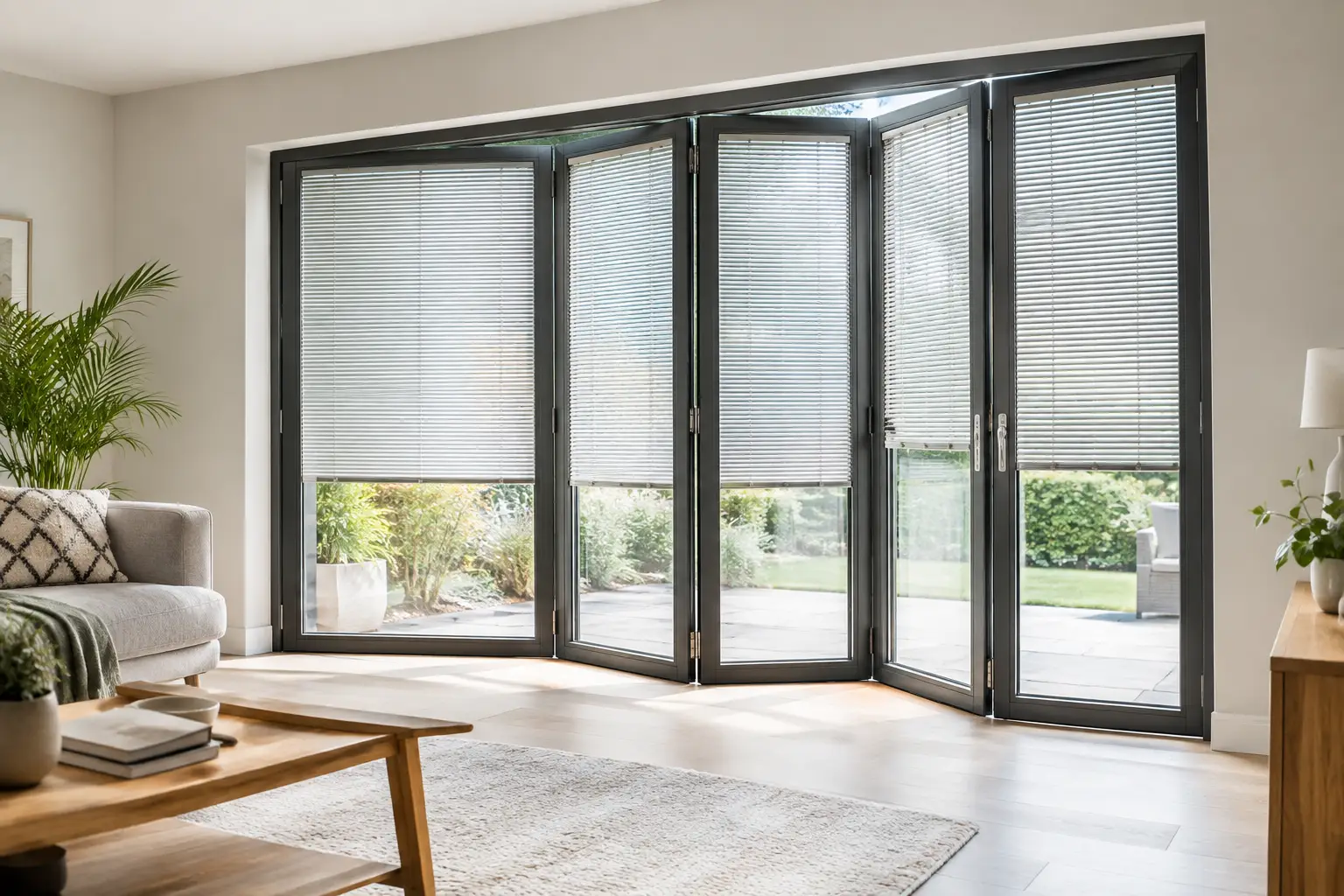
Perfect Fit blinds are designed to sit within the frame of many uPVC windows and doors. They are fitted without drilling into the frame, using brackets that attach neatly around the window beading. The blind moves with the window or door, so it remains in position when you open, tilt or close it.
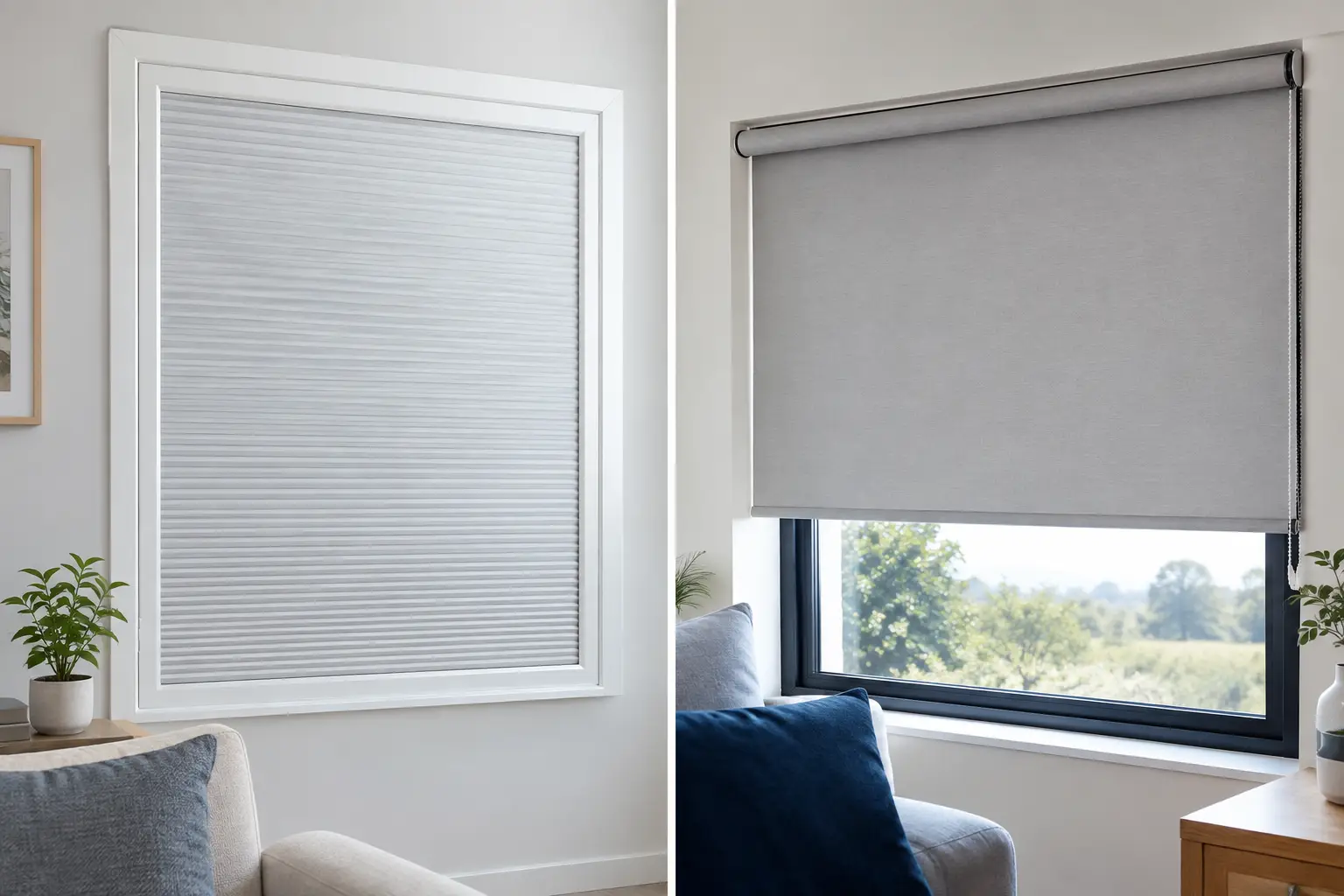
They are available in several styles, including Venetian, pleated and cellular designs. This gives you a choice between precise light adjustment, a softer filtered finish, or an option that can help reduce heat loss through the glass.
Because there are no loose cords or chains hanging beside the glass, Perfect Fit blinds are a particularly practical choice for doors, conservatories and rooms used by children. Their close-fitting design also creates a tidy, built-in appearance that many homeowners prefer on modern frames.
Not every window is suitable, however. The bead shape and depth need to be checked before ordering, which is why accurate measuring and product advice make a real difference. A professional consultation confirms whether the system will fit securely and operate properly.
What are roller blinds?
Roller blinds use a single piece of fabric that rolls up neatly onto a tube at the top of the window. They can be fitted inside a recess, onto the face of the window frame, or above the window on the wall or ceiling, depending on the available space and the finish you want.
This simple design is one reason roller blinds remain a popular choice. There is an enormous range of fabrics, from light-filtering materials that soften daylight to moisture-resistant finishes for kitchens and bathrooms. Blackout fabrics are a strong option for bedrooms, media rooms and any space where reducing outside light matters.
Roller blinds also work well on window shapes and frame types where Perfect Fit systems may not be appropriate. They can cover larger windows effectively and are often the more flexible option where the blind needs to extend beyond the glass area for better coverage.
Their mechanism can be operated by a side chain, spring system or motorised control, depending on the product selected. The right choice depends on the size and position of the window, as well as how often the blind will be used.
Perfect Fit versus roller blinds for everyday living
The most noticeable difference is what happens when the window or door is opened. A Perfect Fit blind stays attached to the moving part of the frame. You can open a window for fresh air or use a glazed door without the blind swinging away from the glass.
A roller blind stays in its fitted position while the window opens beneath it. This is perfectly suitable for many windows, but it may be less convenient on a frequently used door. If the blind is lowered, you may need to raise it before opening the door fully.
For tilt-and-turn windows, Perfect Fit blinds can be especially useful because they stay close to the glass as the window tilts. In a conservatory, they also help keep each individual pane looking clean and organised without loose fabric moving around when doors are in use.
Roller blinds have an advantage when you want one bold, uninterrupted fabric across a window. A carefully chosen colour, pattern or textured weave can become a key part of the room’s look. They are also an excellent practical choice for wide openings, where a simple, easy-to-use blind is the priority.
Light control and privacy
Both styles can provide good privacy, but they handle light in different ways. With a Perfect Fit Venetian blind, the slats can be tilted to reduce glare while still allowing some daylight into the room. This is useful in living spaces, home offices and street-facing rooms where privacy changes throughout the day.
Pleated and cellular Perfect Fit options provide a more diffused effect. They soften bright sunlight and sit neatly against the glass, helping to make a conservatory or garden room more comfortable without shutting the room away from daylight completely.
Roller blinds offer a simpler choice: up for a clear view, down for coverage. The fabric makes the difference. A dim-out fabric reduces glare while allowing some natural light through, whereas a blackout fabric is designed for stronger light reduction and privacy. Even with blackout material, small amounts of light can enter around the sides of a standard roller blind, particularly if it is fitted inside a recess.
If a darker bedroom is your goal, the fitting position is just as important as the fabric. A face-fitted roller blind that overlaps the window opening can reduce side gaps more effectively than one fitted tightly within the recess. During a home visit, this can be discussed alongside the direction the room faces and how much early-morning light reaches the window.
Appearance, cleaning and space
Perfect Fit blinds create a smart, contained finish. As they sit inside the window frame, they do not take up wall space around the opening. This can be helpful where windows are close together, where there is limited room above the frame, or where you want a minimal look.
They are also straightforward to clean. Venetian slats can be dusted regularly, while pleated and cellular fabrics benefit from gentle vacuuming with a soft brush attachment. As the blind is held against the glass, there is less movement and fewer places for dust to gather around a hanging chain.
Roller blinds are equally low-maintenance. Most fabrics can be lightly dusted or wiped with care according to their material and finish. Their clean, flat surface is particularly suited to kitchens and bathrooms when a suitable moisture-resistant fabric is chosen.
Style is more personal. Perfect Fit systems tend to look tailored to the frame, while roller blinds can make a stronger statement through fabric. If your priority is a calm, built-in finish, Perfect Fit may suit the room better. If you want colour, texture or a pattern to stand out, a roller blind may give you more design freedom.
Fitting considerations that affect the choice
It is tempting to choose purely from photographs, but the window itself should lead the decision. Perfect Fit blinds need compatible glazing beads and enough clearance for the blind to operate without catching handles or seals. They are usually best suited to modern uPVC frames and glazed doors.
Roller blinds are more adaptable because their brackets can be fitted in several positions. That makes them suitable for many window types, including deeper recesses, larger openings and spaces where the blind needs to sit away from the glass. The fitting surface still needs to be assessed carefully, particularly above large windows or on plasterboard walls.
For rental properties or homeowners who do not want holes drilled into compatible window frames, the no-drill nature of Perfect Fit can be appealing. On the other hand, a securely installed roller blind is often the better long-term answer where a Perfect Fit system cannot be used.
Professional measuring avoids common problems such as handles catching, blinds sitting unevenly, light gaps being larger than expected, or fabric not covering the opening sufficiently. It also means you can see samples against your own walls, flooring and window frames before making a decision.
Which blind is right for your room?
Choose Perfect Fit blinds when you want the blind to move with a uPVC window or door, prefer a neat frame-fitted finish, or need an uncluttered solution for a conservatory, kitchen door or tilt-and-turn window. They are often a very practical answer where day-to-day access matters.
Choose roller blinds when fabric choice, blackout performance, wide-window coverage or fitting flexibility is more important. They suit almost every room, and the right fabric can address glare, privacy and moisture concerns without making the space feel heavy.
For some homes, the best answer is not to use the same blind everywhere. A Perfect Fit system may make sense on French doors or conservatory windows, while roller blinds provide better coverage and a more decorative finish in bedrooms or larger living-room windows.
A free measuring appointment gives you the chance to compare both options where they will actually be used. Premier Welsh Blinds can assess the frames, show suitable samples and explain how each blind will fit, operate and look before you commit. The right blind should feel easy to live with from the first morning you use it.