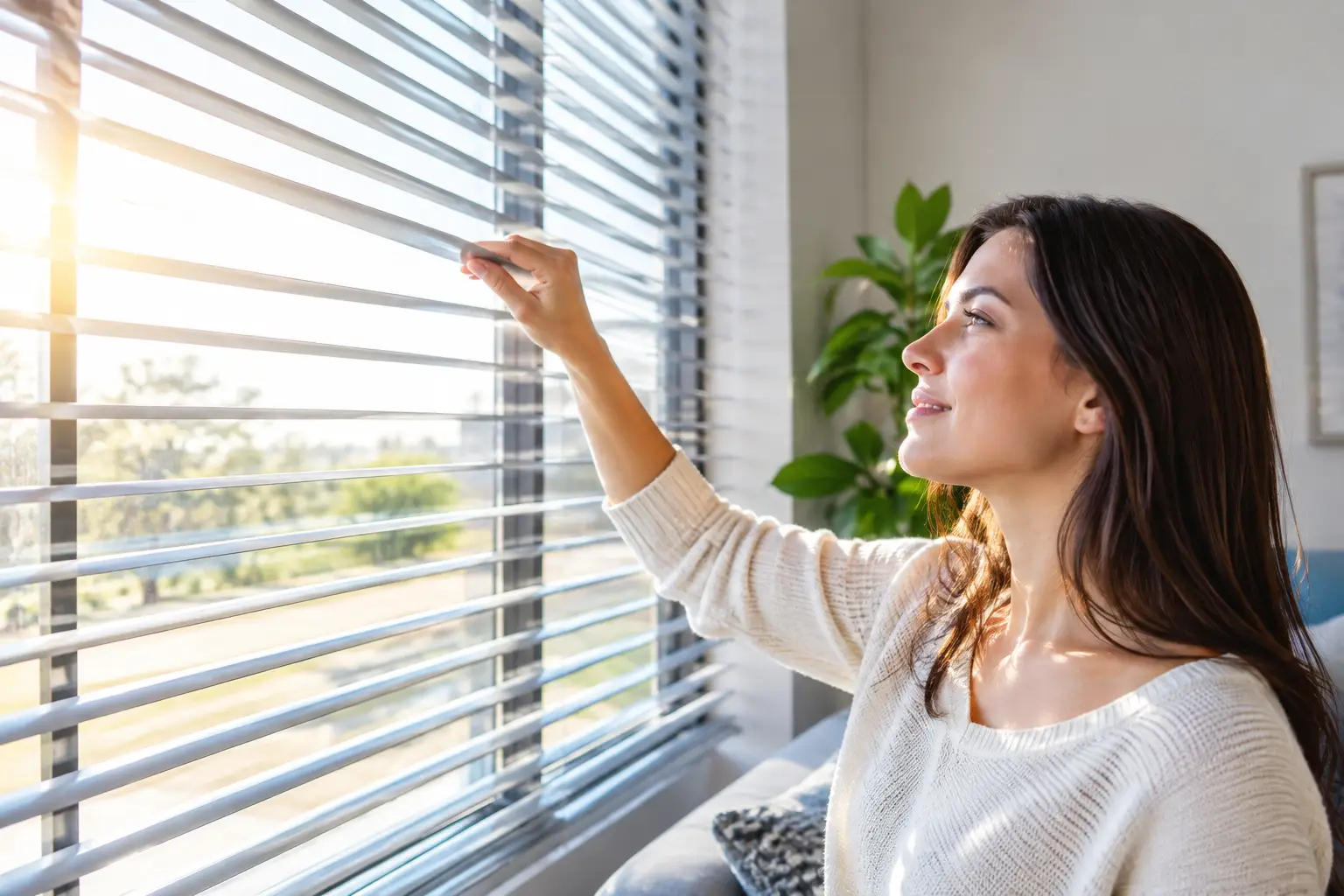
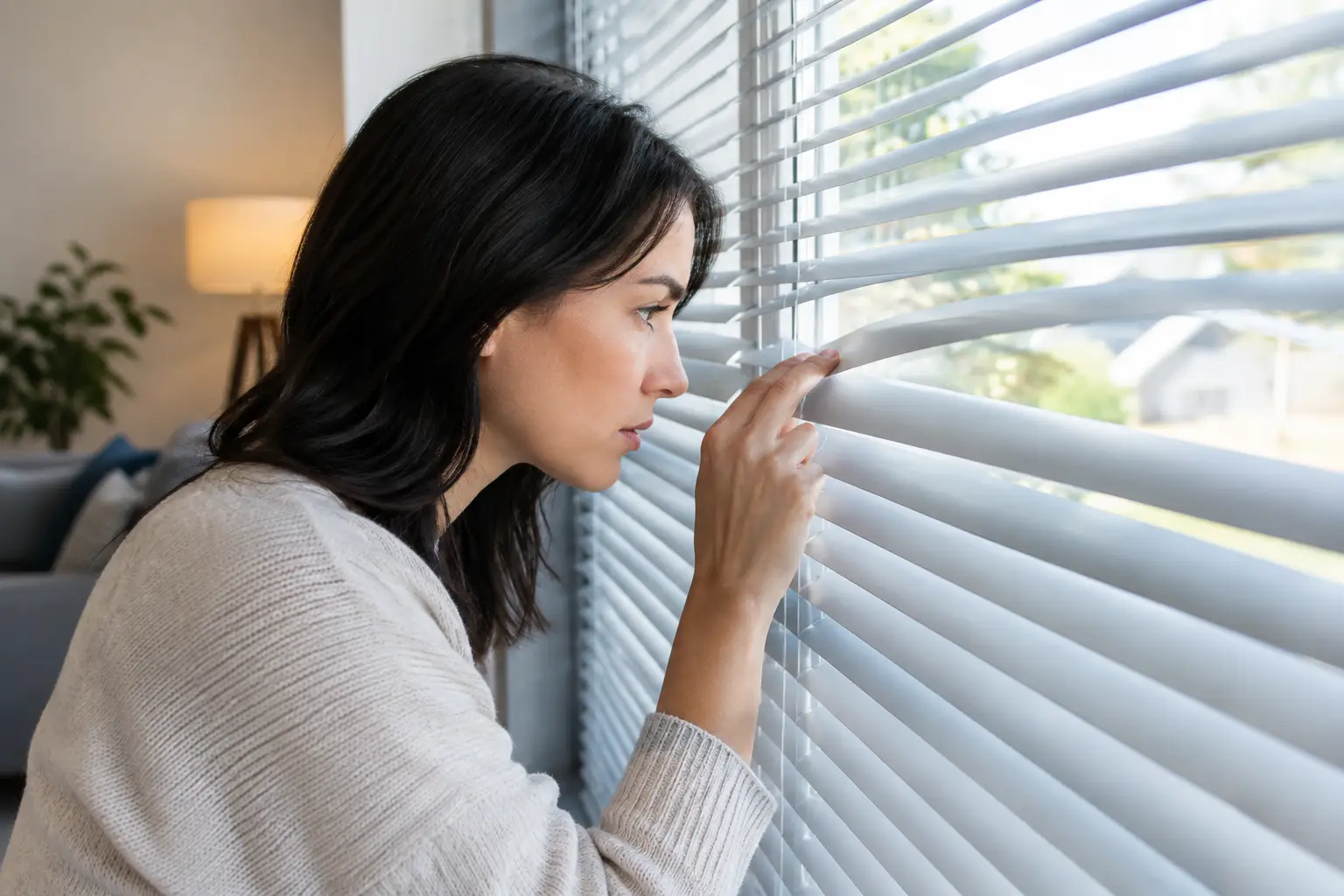
A bathroom window has a tougher job than most. It needs to protect privacy at close range, cope with steam and splashes, let in useful daylight and still look smart after years of daily use. Knowing how to choose blinds for bathrooms means looking beyond colour alone and selecting a material, style and fitting method suited to the room.
The right blind can make a compact bathroom feel brighter and more private without turning the window into another cleaning task. The wrong one may warp, stain, retain moisture or leave awkward gaps at the sides. A made-to-measure option removes much of that uncertainty, particularly around recessed windows, uPVC frames and unusual window sizes.
Start with moisture resistance
Bathrooms create changing conditions: a hot shower can fill the room with steam, while an open window or extractor fan soon cools it again. Over time, this repeated moisture can affect unsuitable materials and fittings.
For most bathrooms, moisture-resistant roller blinds are a practical choice. Their smooth, wipe-clean finish is well suited to everyday splashes and humidity, and there is a wide choice of colours, patterns and privacy levels. They also sit neatly within a recess or close to the frame, which helps keep the room looking uncluttered.
Aluminium Venetian blinds are another strong option. Their slats offer excellent control over both daylight and privacy, and aluminium does not absorb moisture in the way natural materials can. When the window is open, you can angle the slats to maintain privacy while allowing fresh air through.
PVC vertical blinds can work well for larger or wider bathroom windows. They are easy to adjust, simple to wipe down and particularly useful where you want flexible light control. For a more solid, contemporary look, some shutter options are made from water-resistant materials, but it is worth checking that the specific product is designed for humid spaces.
Real wood may look attractive elsewhere in the house, but it is usually not the first choice close to regular steam or splashing water. If you like the warmer appearance of timber, ask about moisture-resistant alternatives that deliver a similar effect without the same risk of movement or damage.
Choose blinds for bathrooms with privacy in mind
Privacy is often the deciding factor, especially in a terraced street, a ground-floor bathroom or a home overlooked by neighbouring properties. Before choosing a fabric or slat style, think about where people can see in from and at what time of day.
A plain privacy roller blind provides a clean solution for many windows. Choose an opaque fabric if you want to prevent views into the room while still allowing some filtered daylight through. This is different from blackout material, which blocks much more light and may be useful if the bathroom is also used for bathing children, shift workers or early evening routines.
Venetian blinds offer a little more flexibility. Tilt the slats upwards and you can reduce sightlines into the room while keeping natural light coming in. This can be especially helpful in bathrooms that feel dark when the blind is fully lowered.
Bear in mind that a blind offers the best privacy when it is sized and fitted properly. Large side gaps, a blind mounted too high above the recess, or a poor fit around the frame can undermine an otherwise good choice. This is one reason professional measuring is valuable: it accounts for handles, tile edges, recess depth and the exact position of the window.
Think about night-time privacy too
During the day, external light helps conceal the room. At night, with lights on inside, the balance changes. If the bathroom faces a road or another property, choose a blind that provides reliable coverage when fully closed rather than relying only on partially angled slats.
Match light control to the way you use the room
Natural daylight makes a bathroom easier to use for shaving, applying make-up and getting ready. It also makes small spaces feel more open. The aim is not always to block light completely, but to control glare and protect privacy without making the room feel enclosed.
For bathrooms with frosted glass, a light-filtering roller blind may be enough. The glass already reduces direct views, so the blind can add softness and extra privacy while allowing a bright feel. In a clear-glazed bathroom window, an opaque roller blind or Venetian blind often gives more dependable control.
Consider the direction the window faces as well. A bathroom that catches strong morning sun may benefit from an easily adjustable Venetian blind. A room that is naturally dim may suit a lighter-coloured, moisture-resistant roller fabric that reflects rather than absorbs available light.
Colour has a practical effect here. White, cream, pale grey and soft neutral shades tend to keep a bathroom feeling fresh and spacious. A darker shade can make a confident design statement, but may feel heavy in a small room unless there is plenty of daylight or strong lighting elsewhere.
Do not overlook cleaning and ventilation
A bathroom blind should be easy to look after because soap residue, condensation and dust can all build up over time. Smooth roller fabrics and aluminium or PVC slats are generally straightforward to clean with regular light dusting and a damp cloth where appropriate. Always follow the care guidance for the particular material rather than using harsh cleaners.
Good ventilation protects both your blind and the room itself. Use the extractor fan during and after showers, open the window where practical and avoid leaving the blind tightly closed against a wet window for long periods. This allows moisture to escape and reduces the chance of residue collecting around the blind and its fittings.
There is a trade-off to consider. A blind fitted closely to the glass can look tidy and reduce gaps, but you still need to be able to open the window and clean around the frame. The best position depends on the style of window, the depth of the recess and whether there are handles that project into the room.
Consider the window type before selecting a fitting
Not every bathroom window is the same. Tilt-and-turn windows, inward-opening windows, roof windows and windows with restricted recesses all need a fitting approach that works with how the window operates.
Perfect Fit blinds are worth considering for suitable uPVC windows and doors. They fit neatly within the frame, move with the opening and can avoid the need for drilling into the frame. This can be especially convenient where space is limited or where a conventional blind would interfere with handles.
For roof windows, including Velux-style windows, a purpose-made blind is usually the sensible route. It should sit securely in place, operate reliably and give the level of privacy and light control the bathroom needs. A general-purpose blind is unlikely to provide the same neat, secure result on an angled window.
If your window has a deep recess, an outside-mounted roller blind may suit the space well. If the recess is shallow, a slimmer system or frame-fitting solution may be more practical. These details are easy to miss when buying off the shelf, but they make a visible difference once the blind is installed.
Select a control that is safe and convenient
The blind needs to be easy to operate when hands are wet and the room is busy. A simple chain-operated roller blind is familiar and effective, while a wand control on Venetian or vertical blinds can make adjusting the angle straightforward. For difficult-to-reach windows, mechanical or motorised options may be worth discussing.
Any operating chains should be fitted with appropriate child-safety devices and positioned correctly. This matters in family homes, but it is also part of a tidy, professional finish. The most suitable control will depend on the window height, who uses the room and how often the blind needs adjusting.
Why made-to-measure fitting makes a difference
Bathroom windows often have the details that make standard sizes frustrating: tiled walls, narrow recesses, unusual widths, handles, vents or frames that do not leave much mounting space. A made-to-measure blind is designed around those details rather than asking you to compromise around them.
A home consultation gives you the chance to compare material samples in the actual light of your bathroom, consider privacy from outside and check how each option will sit around the window. Accurate measuring also helps ensure the blind opens and closes smoothly, looks balanced and provides the coverage you expected.
For homeowners in Neath, Swansea, Port Talbot, Bridgend and Ammanford, Premier Welsh Blinds can handle the process from free measuring and product guidance through to a clean, insured installation. You receive a clear quotation before work is arranged, along with advice on operating and maintaining your chosen blind.
The best bathroom blind is the one that handles moisture without fuss, gives you privacy when you need it and suits the way your window opens. Choose a practical material first, then refine the finish, colour and control to make the room feel properly yours.