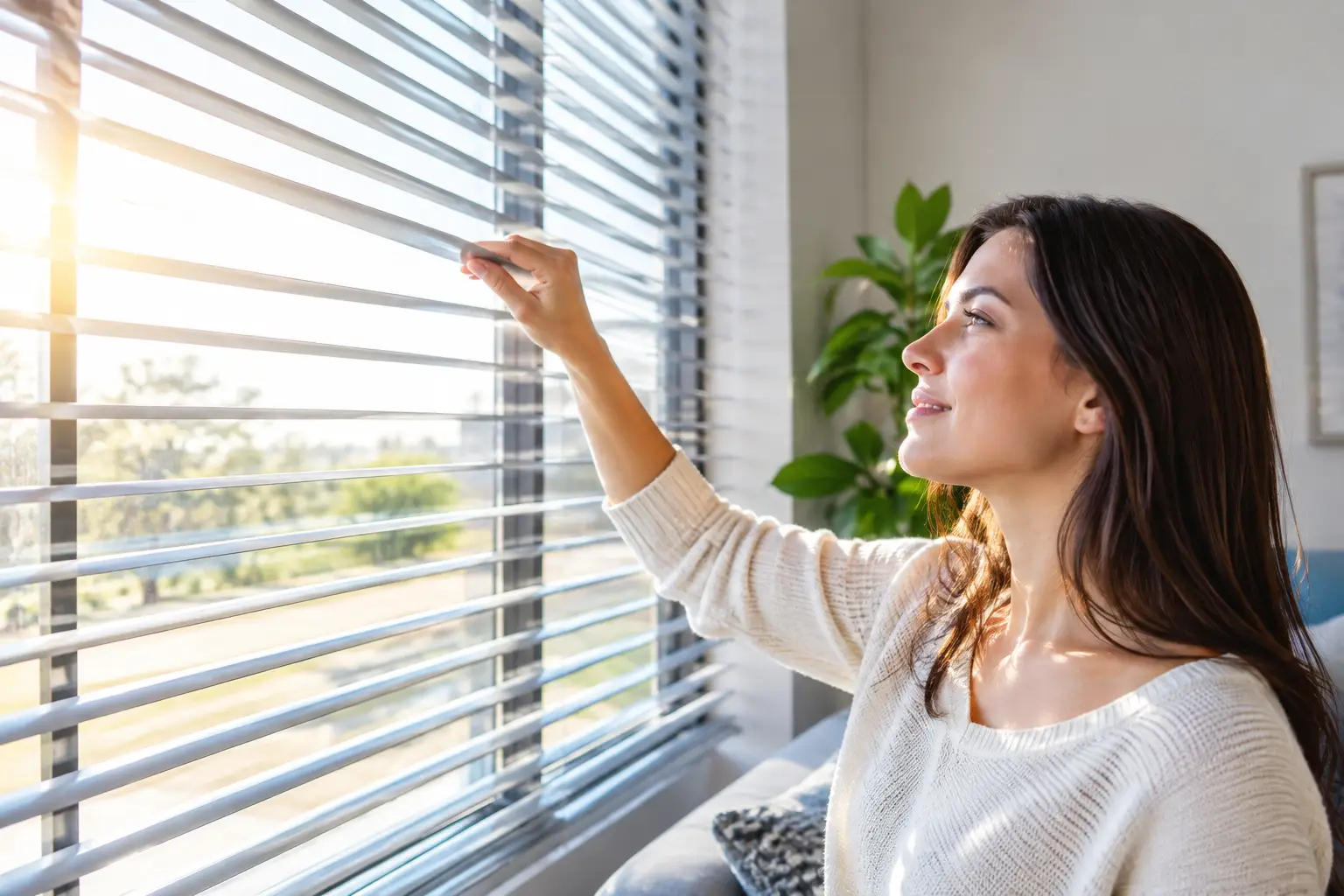
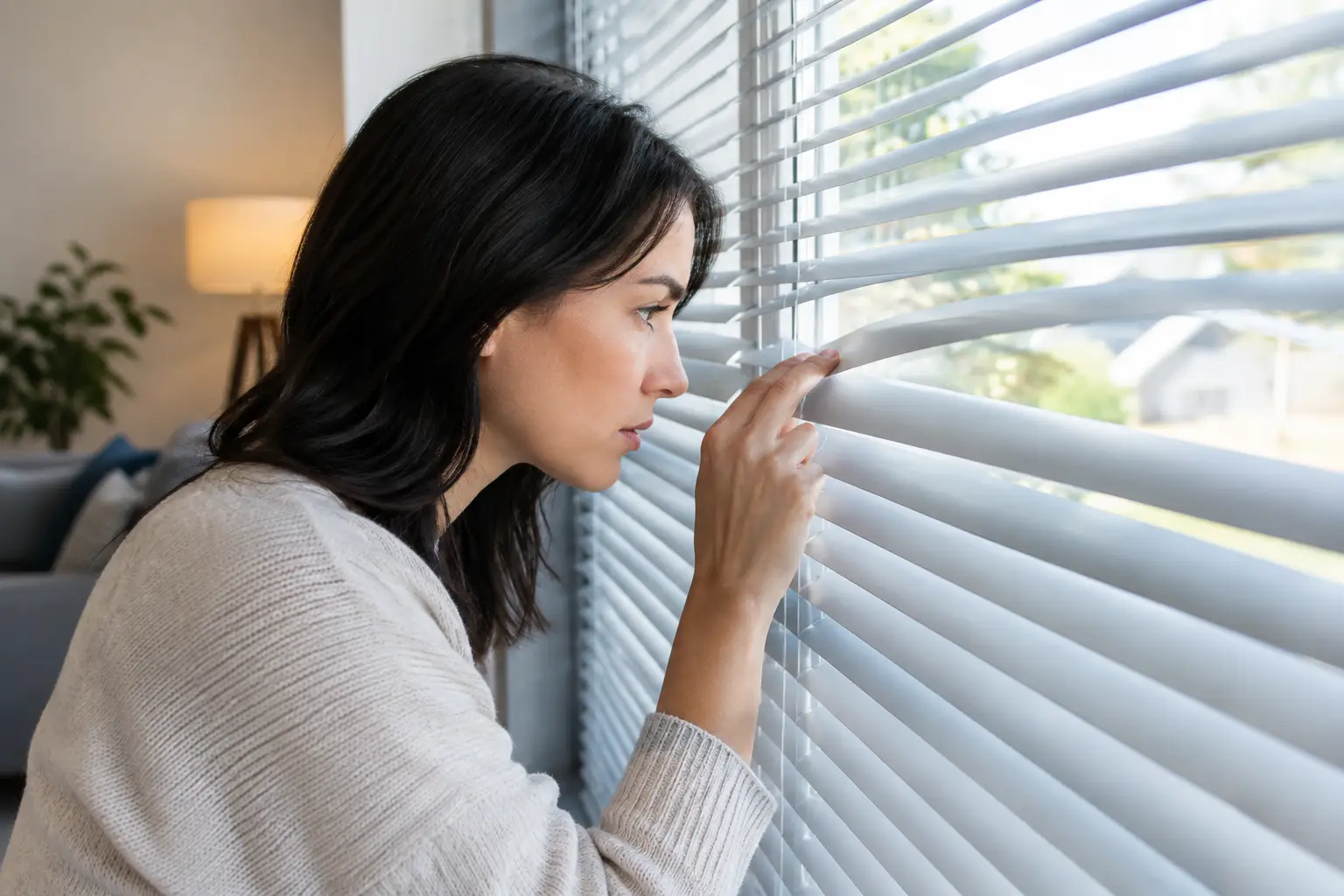
A streetlamp outside the window, an early summer sunrise, or a neighbor’s security light can turn a comfortable bedroom into a room that never feels properly dark. Blackout blinds for bedrooms are designed to solve that problem, but the result depends on more than choosing a fabric labeled “blackout.” The style of blind, how closely it fits the window, and the way it is measured all affect how much light enters the room.
For many homes, the goal is not complete darkness at every hour. It is better sleep, more privacy, and a bedroom that feels calmer when the day is over. Choosing the right made-to-measure blind helps you get there without making the room feel heavy or closed in.
What blackout blinds actually do
A blackout blind uses an opaque fabric or backing that prevents light from passing through the material itself. Unlike a dim-out fabric, which softens daylight, blackout fabric is intended to block it. This makes it a strong choice for bedrooms, nurseries, guest rooms, and rooms used by shift workers.
However, even the best blackout fabric cannot stop light that comes around the sides, top, or bottom of a blind. This is why an off-the-shelf option can sometimes disappoint. A blind that is too narrow, mounted in the wrong position, or not suited to the window shape may still leave bright strips of light at the edges.
A professionally measured blind is made for the available space and the way the window opens. That gives you a neater appearance and a much better chance of achieving the level of darkness you expect.
Start with the room, not just the window
Before choosing a style, consider how the bedroom is used. A child’s room may need stronger light control for naps and earlier bedtimes. A main bedroom might need privacy from nearby homes as well as a softer, more refined finish. In a loft bedroom, the challenge may be a roof window that catches direct morning sun.
It is also worth looking at what is outside. South-facing bedrooms often become bright very early, while a bedroom facing a busy road may be affected by headlights and street lighting after dark. A room with a large bay window can need a different approach from one with a single recessed window.
The right choice is rarely just about the darkest possible fabric. It is about balancing light control, insulation, privacy, ease of use, and a look that works with the rest of the room.
The best blackout blind styles for bedrooms
Blackout roller blinds
Roller blinds are a popular bedroom option because they are clean, simple, and available in a wide range of blackout fabrics. They sit neatly within or above the window recess and are easy to operate. They also work well in modern bedrooms where you want the window covering to feel unobtrusive during the day.
A roller blind can provide excellent light reduction, especially when measured carefully and fitted to cover the window opening properly. If you are particularly sensitive to light, ask about the best mounting position and how much overlap is possible at the sides.
Blackout vertical blinds
Vertical blinds can be a practical choice for wide windows, patio doors, or bedroom doors leading to a balcony. The vanes can be tilted to control privacy and daylight without raising the whole blind, which is useful when you want soft light rather than a fully open window.
They are not always the first choice for a small, cozy bedroom, as there can be slight gaps between vanes. Still, with quality materials and a well-planned fit, they are a useful option where flexibility matters as much as blackout performance.
Perfect Fit and framed blind systems
For some windows and doors, a framed blind system can make a noticeable difference. Perfect Fit blinds are fitted into a frame that sits close to the glass, so there is less movement and fewer side gaps than with some freely hanging blinds. They are particularly useful for tilt-and-turn windows, doors, and conservatories.
These systems are not right for every window, but they are worth considering where light leaks around the edges are a concern or where you need the blind to stay in place as a door is opened and closed.
Velux blackout blinds
Roof windows need their own solution. Standard blinds may not sit securely against a sloping Velux window, allowing light to enter around the sides. Purpose-made Velux blackout blinds run within side channels and are designed to give better coverage, making them a sensible option for loft conversions and attic bedrooms.
They can also help reduce glare and heat from direct sunlight. That said, a blackout blind is not a replacement for ventilation, so it is still useful to consider how you will air the room in warmer weather.
Light gaps: the detail that changes the result
When someone says a blackout blind “doesn’t work,” the issue is often not the fabric. It is light coming from around it. There are four main places this happens:
- Along the left and right edges of the blind
- Above the headrail or roller
- Below the bottom bar or hem
- Between separate blinds on a wide window or bay
A made-to-measure consultation allows these details to be assessed before anything is ordered. The fitter can advise whether the blind should sit inside the recess or outside it, how much coverage is available, and whether a different style would perform better for that particular window.
For bedrooms where darkness is especially important, layering can also help. Blackout roller blinds with curtains are a popular combination. The blind provides the main light blocking and privacy, while curtains soften the room and can cover some of the remaining edge light. This is also a good way to add texture or color without compromising practical performance.
Choosing fabric, color, and finish
Blackout fabric does not have to mean dark fabric. Many blackout ranges include whites, creams, grays, soft neutrals, and patterned finishes. The blackout backing does the work, so the front-facing color can be chosen to suit the bedroom.
Paler blinds can keep a compact room looking open during the day, while darker shades can create a more cocooning feel. In a nursery, a calm neutral may work well as the child grows. In a guest room, a simple roller blind in a versatile shade often gives the room a finished look without dominating it.
Think about cleaning, too. Bedrooms are generally lower-maintenance spaces than kitchens, but fabrics still collect dust over time. Most blinds benefit from regular light dusting or gentle vacuuming with a brush attachment. Your installer should explain the right care routine for the specific product you choose.
Why measuring and fitting matter
Window openings are rarely as straightforward as they appear. Recesses can be uneven, handles can interfere with operation, and trims or tiles can affect where a blind can be fitted. Bay windows add further angles and spacing considerations.
Accurate measuring helps avoid common problems such as a blind catching on a handle, a roller sitting too close to the frame, or a gap appearing because the product was ordered to a standard size. It also ensures controls are positioned where they are practical and safe to use.
Premier Welsh Blinds provides in-home consultation, free measuring, quotation, and professional fitting, so homeowners can see samples in their own bedroom and make decisions based on the real light and colors in the space. A tidy installation and clear guidance on operation make the final step straightforward rather than another DIY job to manage.
A simple way to make the right choice
When planning blackout blinds, begin by deciding how dark the room needs to be and when. Then consider the window type, how it opens, and whether you want the blind to be the main design feature or blend into the background. Finally, look closely at the edges and installation position, because that is where blackout performance is won or lost.
A bedroom should support rest from the moment you close the blind. With the right fabric, the right fit, and careful installation, your window covering can make that everyday routine feel noticeably more comfortable.