A bright office can feel welcoming until sunlight starts reflecting off screens, heating up desks and making meetings uncomfortable. The right shading should solve those daily frustrations without leaving the workspace dark or closed in. This office window shading guide explains how to choose blinds that suit the way your team works, the direction of your windows and the finish you want for the space.
Start with the problem each window needs to solve
There is no single best blind for every office. A south-facing bank of glazing may need strong glare reduction and better temperature control, while a ground-floor meeting room may be more concerned with privacy. Windows close to reception can also have a visual role, helping the business look tidy and professional from the outside.
Before choosing a style, look at each room during its busiest hours. Notice where people sit, which screens catch the sun and whether staff are adjusting their position through the day. This simple check prevents a common mistake: choosing blinds for appearance alone, then finding they do not provide enough control where it matters.
It also helps to consider how a room is used. A training area may need flexible shading for presentations, while a private office may benefit from a more consistent level of privacy. In kitchens or staff rooms, easy-clean materials can be a priority. Treating every window individually usually gives a better result than fitting the same product throughout simply because it seems easier.
Office window shading guide: balance light, comfort and privacy
Good office shading does not mean blocking all daylight. Natural light can make a workspace feel more pleasant, but direct sun is often the issue. The aim is to soften harsh light while retaining a useful level of brightness.
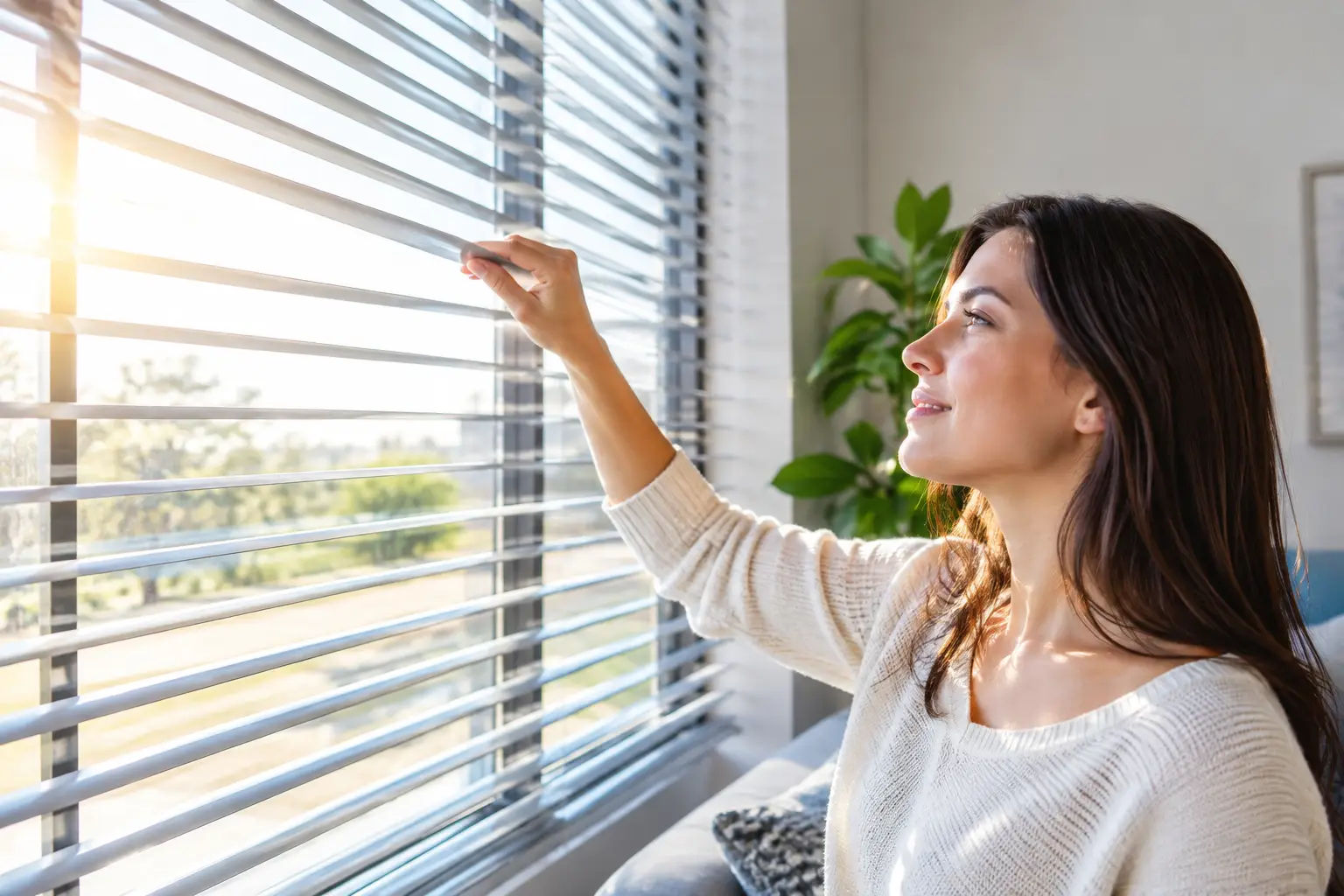
Venetian blinds are a practical choice where adjustable light control is important. Their slats can be tilted to direct light away from screens while still allowing daylight into the room. They work particularly well in offices where sunlight changes throughout the day and staff need to make small adjustments rather than fully raise or lower the blind.
Roller blinds offer a clean, simple look and are well suited to windows that need consistent coverage. Depending on the fabric selected, they can filter daylight, provide privacy or offer a darker finish for rooms used for presentations. They are also a sensible option when a streamlined, uncluttered appearance is part of the brief.
Vertical blinds can be especially useful across wide windows and doors. Their louvres can be turned to manage low-angle sun, and they are easy to operate across larger glazed areas. For commercial spaces with broad window runs, that flexibility can be more practical than several smaller individual blinds.
The right choice depends on the balance you need. A fabric that looks light and airy may reduce glare but still allow strong sunlight through. A blackout option gives much greater darkness and privacy, but may not suit a busy office that relies on daylight for most of the day. A professional consultation helps make those trade-offs clear before anything is ordered.
Match the blind style to the room
Open-plan offices
In an open-plan office, consistency matters visually, but comfort still comes first. Consider how daylight travels across the room and whether desks are likely to move in future. Adjustable Venetian or vertical blinds can work well where different people experience the sun at different times.
For a calmer, more uniform finish, roller blinds are often a strong option. Selecting the right fabric is key, as it determines how much glare is softened and how much outside visibility remains. If computer work is central to the day, it is worth prioritising screen comfort over a fabric that is purely decorative.
Meeting rooms and presentation spaces
Meeting rooms usually need more control. Video calls, projected presentations and confidential discussions can all be affected by unshaded windows. A blind with stronger light reduction can stop faces appearing in shadow on camera and make screens easier to see.
Privacy matters here too, especially for ground-floor rooms or offices facing nearby properties. A made-to-measure blind allows full, neat coverage without awkward gaps at the sides, helping the room feel suitably private when the blind is closed.
Reception areas and customer-facing rooms
Reception windows set an early impression. The shading should look smart from both inside and outside while remaining straightforward for staff to use. Roller blinds and well-fitted Venetian blinds are popular for this reason, offering a tidy finish without taking attention away from the rest of the space.
Think about the view from the pavement as well as the view from the reception desk. If the window displays business information or faces a busy street, the blind colour and operating position should support rather than obscure that purpose.
Offices with doors, roof windows or awkward glazing
Not every opening is a standard upright window. Glazed doors, tilt-and-turn windows and roof windows need a solution that fits and operates properly. Perfect Fit blinds can be a useful choice for suitable frames because they sit neatly within the frame and move with the door or window. Velux blinds are designed for roof windows where ordinary options may not stay in position.
This is one of the clearest reasons to have the windows measured properly. A product that is almost the right size can catch, leave gaps or look unfinished. Bespoke fitting avoids those compromises.
Consider operation and everyday maintenance
The best shading system is one that people will actually use correctly. If a blind is difficult to reach, fiddly to adjust or unsuitable for the window layout, it may remain in one position all day and fail to do its job.
For offices with several windows, consider who will operate the blinds and how often adjustments are likely to be needed. Straightforward controls are usually the best choice for busy shared spaces. In rooms with occasional use, such as boardrooms, a more complete closed position may matter more than frequent fine adjustment.
Maintenance should be realistic too. Dust can build up in commercial settings, particularly near entrances, main roads or work areas. Choose materials and styles that can be cleaned without disrupting the working day. Regular light dusting and prompt attention to marks will keep blinds looking professional for longer.
Why measuring and fitting make a difference
Office windows are rarely as uniform as they first appear. Recess depths vary, handles can interfere with operation and even apparently identical windows may be a few millimetres different. Those details affect whether blinds sit neatly, close effectively and can be used without obstruction.
A made-to-measure service begins by assessing the window, the fixing surface and the practical needs of the room. It also gives you the chance to compare colours, materials and operating options in the actual light of the workplace. That is far more reliable than choosing from a small online image or hoping an off-the-shelf size will work.
Professional fitting keeps disruption to a minimum. For businesses in Neath, Swansea, Port Talbot, Bridgend and Ammanford, Premier Welsh Blinds can measure, advise and install to suit the agreed schedule, leaving a clean, properly finished result. You also receive guidance on operating and looking after the blinds once fitting is complete.
Choose a finish that supports your workplace
Neutral shades are often a safe choice in offices because they suit changing furniture, signage and décor. White, grey and soft natural tones can help a room feel bright while keeping the focus on the work taking place. Darker colours can create a more defined look, but they may make a small or low-light room feel heavier.
Do not overlook the reverse side of the blind either. Where windows are prominent from outside, a consistent finish can make the building look more considered. In customer-facing spaces, this small detail contributes to an organised, dependable impression.
A well-planned shading choice should make the office easier to use, not add another thing for staff to manage. Start with the light problems you experience each day, then choose a made-to-measure solution that feels right for the room, the people using it and the way your business works.