At half past two, when low sun hits a bank of office screens, a window covering quickly becomes more than a finishing touch. The right vertical blinds for office windows can reduce glare, protect privacy and give staff control over daylight without leaving the workspace dark. For offices with wide windows, tall glazing or doors leading outside, they are a practical option that also keeps the room looking neat and professional.
The best result comes from choosing a blind around the way the office is actually used. A meeting room has different needs from a reception area, while a bright, south-facing workspace may need more flexible light control than a room used mainly for storage. Here is what to consider before arranging a made-to-measure installation.
Why vertical blinds suit office windows
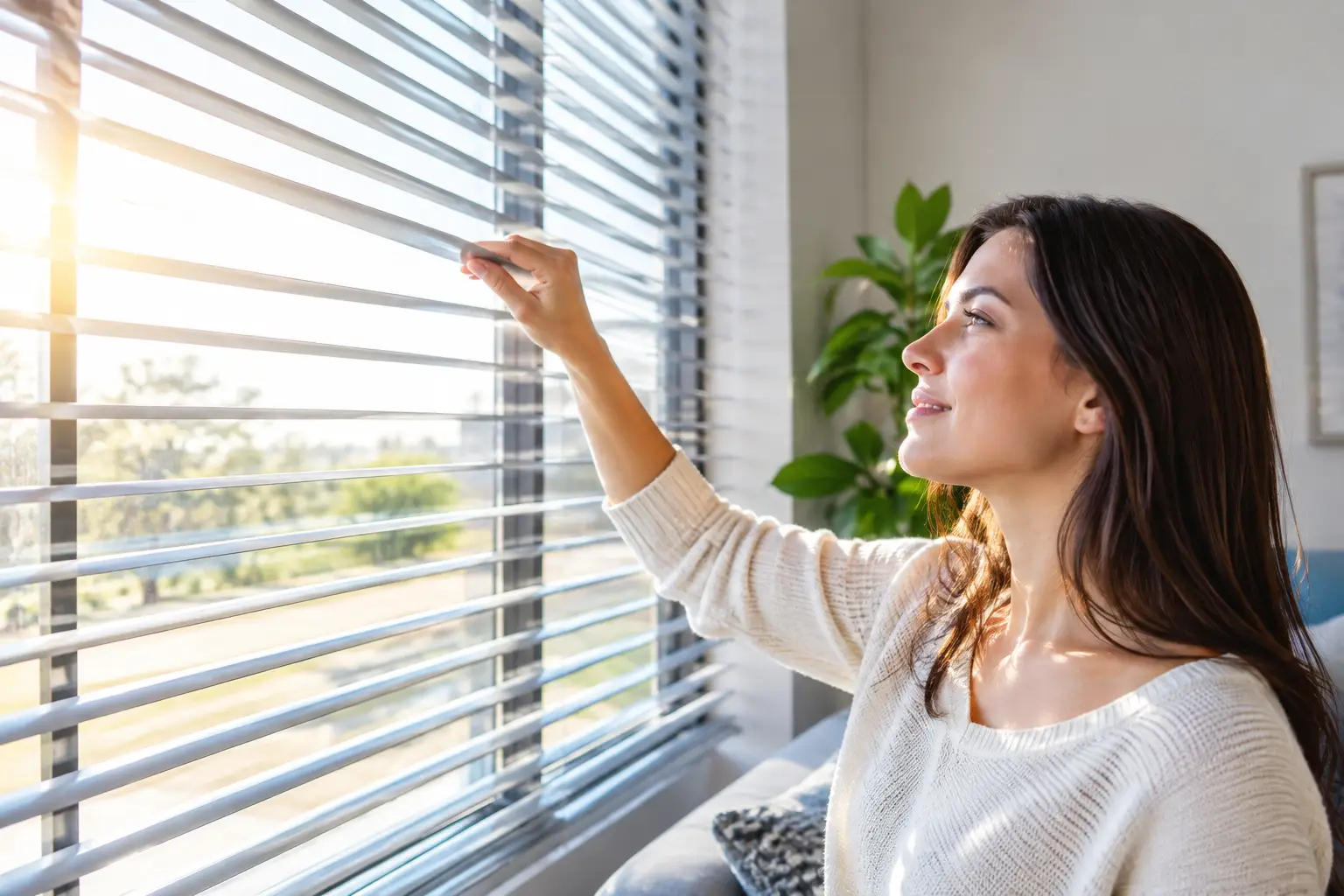
Vertical blinds are designed around individual fabric louvres that turn to direct the light. You can tilt them to soften harsh sunshine, close them for greater privacy, or draw them to one side when a clear view and maximum daylight are wanted. That level of adjustment is especially useful in offices where computer work, meetings and client visits happen in the same room.
They are also well suited to larger openings. A wide run of windows can be covered evenly rather than broken up by several smaller blinds, creating a cleaner look across the wall. For commercial premises with patio-style doors or full-height glazing, the louvres can be drawn aside to keep access straightforward.
Better control of glare on screens
Screen glare is a common frustration in bright offices. Closing a blind completely can solve it, but it can also make the room feel gloomy and increase reliance on artificial lighting. With vertical louvres, the angle can be adjusted through the day to cut direct sun while still allowing useful daylight into the room.
This is not a guaranteed fix for every layout. If desks face directly towards a large, unshaded south or west-facing window, careful positioning of monitors may still be needed. However, a properly fitted vertical blind gives the team a much more manageable starting point.
Privacy without closing off the room
Ground-floor offices, treatment rooms and meeting spaces often need privacy from passers-by or neighbouring properties. Angled louvres can restrict direct views inside while keeping the space brighter than a fully closed blind. Where privacy is the main priority, a denser fabric and a closer louvre setting may be the better choice.
For rooms where confidential discussions take place, it is worth checking the view from outside at different times of day. Evening lighting can change how visible an office is, particularly when the interior is brighter than outdoors.
Choosing vertical blinds for office windows
A vertical blind should work with the window, the room and the people using it. Colour matters, but the practical details usually make the bigger difference day to day.
Select fabric for the light and the setting
Light-filtering fabrics are a popular choice for general workspaces. They take the edge off sunshine and maintain a bright, welcoming feel. Neutral shades such as white, soft grey, cream or pale beige often suit offices because they work with changing décor and reflect light well.
Darker fabrics can look smart and may be useful where stronger shading is required, but they can make a compact or naturally dark room feel more enclosed. Patterned fabrics may suit a customer-facing reception or creative studio, although a simple finish is often the safer long-term choice for a professional setting.
If the office needs a more substantial reduction in daylight for presentations, private consultations or rooms exposed to intense sun, ask about blackout-style fabrics. They can be very effective, although small lines of light may still be visible between louvres and around the edges. The amount of coverage depends on the window shape, fitting position and how the blind is operated.
Think about louvre width and window shape
Louvre width affects the finished appearance. Wider louvres tend to suit broad windows and can give a more streamlined look. Narrower louvres can be a good fit for smaller windows or where a more detailed finish is preferred. A professional survey makes this easier, as proportions that look right in a sample book can feel different across a full wall of glass.
The direction in which the blind opens also matters. It may stack to the left, right or split from the centre, depending on where doors, handles, desks and walkways sit. There is little value in a blind that looks excellent but collects in front of the most-used door or obstructs a window handle.
Choose operation that staff can use easily
In a busy office, controls need to be straightforward. Chain-operated systems are familiar and allow users to tilt the louvres and draw them across the window with minimal effort. For higher windows, larger installations or places where a cleaner finish is preferred, mechanical or motorised options may be worth discussing.
The right choice depends on how often the blind will be adjusted and who will use it. A small private office may be well served by a simple manual system. A shared workspace with frequent changes in light may benefit from an option that is quicker and easier for everyone to operate.
Made-to-measure fitting prevents everyday problems
Office windows are not always as square or uniform as they first appear. Recess depths vary, walls can be uneven and handles or opening sections may affect where a blind can sit. Measuring carefully is what helps the louvres hang neatly, close properly and clear the features around the window.
Made-to-measure vertical blinds also give you more control over the finished look. The track can be sized for the opening, the fabric selected to suit the room and the stacking arrangement planned around access. This is particularly valuable in commercial spaces, where one poorly fitting blind can stand out across an otherwise tidy office.
A professional fitting service removes the uncertainty of working out bracket positions, fixing into different wall or ceiling materials, and setting up the controls correctly. At Premier Welsh Blinds, the process begins with a free measure and a conversation about how the room is used. Once the quotation and fabric choice are agreed, the blinds are made to size and fitted carefully, with guidance on operation and basic care before the job is complete.
For offices in Neath, Swansea, Port Talbot, Bridgend and Ammanford, local installation can also make planning easier. Appointments can be arranged around the working day, helping to keep disruption to a minimum.
Keeping office vertical blinds looking smart
Vertical blinds are relatively simple to maintain, but regular light cleaning helps prevent dust from becoming noticeable. Use the soft brush attachment on a vacuum cleaner at low suction, moving gently down each louvre rather than pulling across it. A dry microfibre cloth can also be useful for light dusting.
For marks or spills, check the fabric care guidance before using water or cleaning products. Rubbing too firmly can leave a patch or damage the fabric finish. In a kitchen area, workshop office or other space where airborne grease or dirt is likely, choose a material suited to more frequent cleaning and make this part of the selection conversation.
It is also sensible to operate the blind gently. Turn the louvres to the open position before drawing them across, and avoid forcing the chain if something catches. Small habits like these can help the track and louvres continue working smoothly.
When a vertical blind is the right choice
Vertical blinds are often the strongest option for wide office windows, tall glazing and doors where flexible access is needed. They offer a practical balance of glare reduction, privacy and adjustable daylight, without making the room feel permanently shut off.
They may be less suitable where windows are very small, where the cleanest possible blackout is essential, or where the room needs a different style of operation. Roller blinds, Venetian blinds or shutters may be a better match in those cases. The useful question is not which product is best in general, but which one will make the particular office easier to work in.
A free measure is the simplest way to turn that question into a clear choice. Seeing fabric samples against the actual light, checking the window layout and discussing how the space is used will help you choose a finish that looks considered and works well long after fitting day.