French doors bring welcome daylight and a clear view of the garden, but they can be awkward to dress well. The best blinds for French doors need to look smart while allowing each door to open properly, clearing handles and staying secure when the doors are in use.
This is why a made-to-measure approach makes such a difference. A blind that is only a few millimetres too wide, mounted at the wrong depth or poorly suited to the door’s movement can quickly become frustrating. The right choice depends on how you use the room, how much privacy you need and the style of your doors.
What makes French door blinds different?
Unlike a standard window, French doors are opened and closed regularly. They also tend to have handles, glazed panels and narrow frames that limit where a blind can sit. A good solution should operate independently on each door, keep close to the glass and avoid swinging about whenever someone goes outside.
Light control matters too. South-facing doors may need stronger glare reduction, while a dining room or kitchen may benefit from a softer level of shade without blocking all natural light. For bedrooms, privacy after dark and effective blackout can be the priority.
Before choosing a style, it helps to consider four practical details:
- whether both doors are used equally often;
- the position and projection of the handles;
- the depth and shape of the glazed beading or frame; and
- whether you want the blind to remain in place when the doors are open.
A professional survey takes these details into account before anything is ordered. It removes the guesswork around fitting position, clearances and the finished appearance.
Perfect Fit blinds for French doors
For many homes, Perfect Fit blinds are among the best blinds for French doors. They are fitted neatly within the frame of each glazed panel, without drilling into the door itself. The blind moves with the door, so it stays tidy when you open it and does not swing or knock against the glass.
This close-fitting design is particularly useful in busy kitchens, conservatories and garden rooms where the doors are in constant use. It also gives a clean, built-in look, with no loose cords hanging across the door.
Perfect Fit blinds are available in a range of styles, including pleated and Venetian options. Pleated fabrics can give a softer filtered light, while Venetian slats offer more precise control over privacy and sunlight. The best option comes down to how much adjustment you want during the day.
They are not suitable for every door system, however. The frame and glazing arrangement need to be compatible. A free measuring appointment can confirm this quickly and identify the best alternative if another fitting method would work better.
Venetian blinds for flexible light control
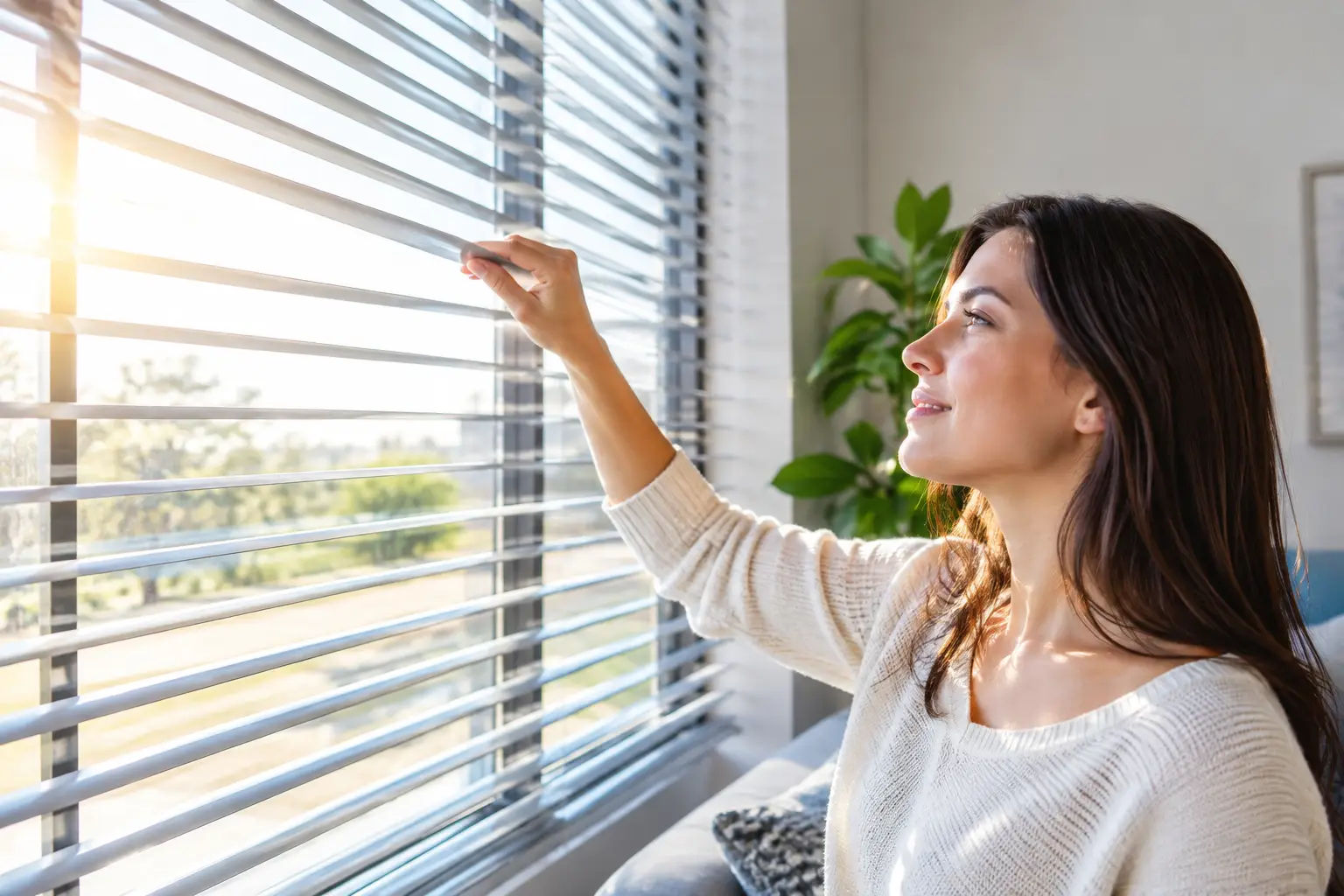
Venetian blinds remain a popular choice for French doors because their slats can be tilted to manage glare while keeping daylight in the room. They are practical for rooms that face the garden or receive strong afternoon sun, as you can redirect the light rather than fully closing the blind.
Aluminium Venetians are a sensible choice where easy cleaning is important, such as kitchens and rooms with frequent access outdoors. They are available in a wide range of colours, from subtle neutrals to stronger shades that make more of a feature of the doors. Wooden-look and real wood styles can bring added warmth, although the available space around handles and frames must be assessed carefully.
For doors, the key is choosing a secure fitting that sits close to the glass. A loose or poorly positioned Venetian blind may move as the door opens. Correct measurement and fitting ensure the blind has the clearance it needs while still looking balanced across both panels.
Roller blinds for a simple, modern finish
Roller blinds are an excellent option when you prefer clean lines and a broad choice of fabrics. They can provide anything from gentle light filtering to stronger privacy and blackout performance, depending on the fabric selected.
On French doors, roller blinds are usually fitted individually rather than as one wide blind across the full opening. This lets you use each door independently. A carefully chosen compact system and a secure bottom bar or hold-down arrangement can help keep the blind in place when the door is moving.
The trade-off is that a roller blind needs enough room above or around the glazed section for the mechanism. It is also important to think about the handles. If a blind is mounted too close, it may obstruct them or be damaged through everyday use. This is one of the most common issues with off-the-shelf products, particularly where door sizes are not standard.
For bedrooms, look for blackout roller fabrics if reducing early morning light is a priority. Bear in mind that no blind fitted to a door panel will remove every trace of light around its edges, but the right fabric and close fit can make a noticeable difference.
Shutters for a tailored, long-lasting option
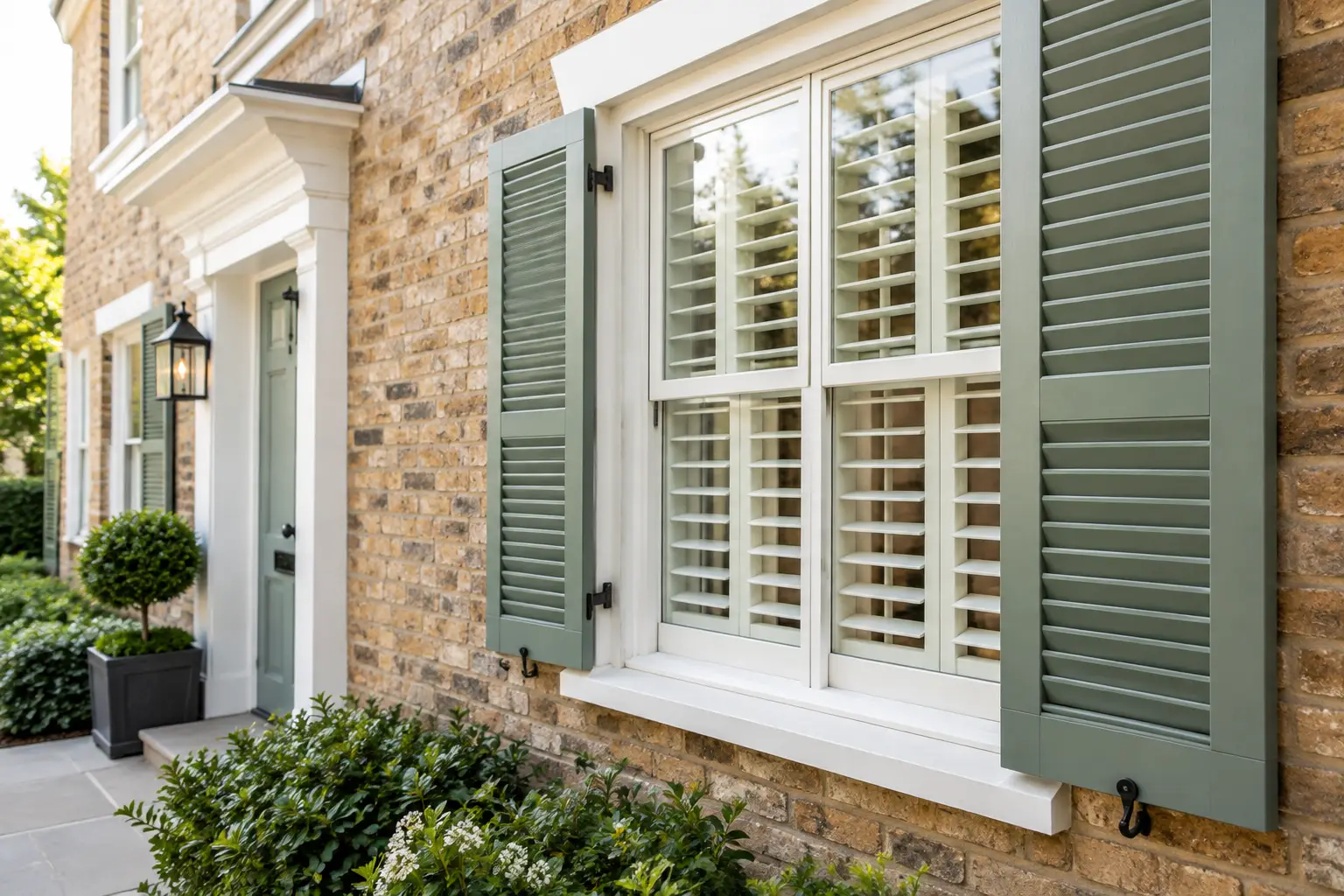
Shutters can suit French doors beautifully, particularly in living rooms, dining rooms and period properties. When designed around the doors, the panels open with the doors or fold back neatly, giving clear access when required. Adjustable louvres provide privacy and light control without making the room feel closed in.
They are a more substantial investment than many blind styles, but their made-to-measure finish and durability appeal to homeowners planning a longer-term improvement. Shutters can also create a more structured look, especially on larger doors leading into a patio or garden.
The detail of the door layout matters here. Handles, hinges, opening direction and the surrounding frame all need to be measured precisely. A well-planned shutter installation feels like part of the room; a poorly measured one can interfere with how the doors function.
Which blind is right for your room?
There is no single answer for every home. Perfect Fit blinds are often the practical first choice for frequently used doors because they sit neatly against the glass and move with the door. Venetian blinds are ideal when you want to adjust light throughout the day. Roller blinds work well for a streamlined fabric finish and stronger privacy, while shutters suit homeowners looking for a more permanent, tailored feature.
Think about the room beyond the doors as well. In a kitchen, easy-clean materials and a secure fit are usually most useful. In a lounge, appearance and flexible daylight control may lead the decision. For a bedroom or garden room used for guests, blackout fabric and privacy can be more important.
Colour also has an effect. Light neutral shades keep the doors feeling open and can blend into pale frames. Darker shades create definition but may make a small room feel more enclosed when the blinds are down. Samples viewed in your own home are far more useful than choosing from a small image, as natural light changes significantly through the day.
Why measuring and fitting matter
French doors leave little room for error. Every handle, hinge and frame detail affects what can be fitted and how it will operate. Measuring each glazed panel separately ensures the blinds line up properly and that both doors can be opened without obstruction.
A professional fitter will also make sure the controls are safe, accessible and positioned where they are convenient to use. The finished result should be neat from inside and outside, with secure brackets, even spacing and no unnecessary drilling where a no-drill system is suitable.
At Premier Welsh Blinds, the process begins with a free measuring visit so you can compare suitable styles, fabrics and colours in the room where they will be used. Once you have chosen, your blinds are made to size and fitted cleanly, with guidance on everyday operation and care.
The most successful French door blinds are the ones you barely have to think about. They should give you the privacy, shade and finish you want, then work reliably each time you step outside.