A home office has to work through bright mornings, video calls, changing weather and the occasional need to concentrate without distraction. This home office blinds guide will help you choose a window covering that looks right in your room while giving you practical control over glare, privacy and comfort.
The best choice is rarely just about colour. The direction your window faces, the size of the glass, where your desk sits and how you use the room all make a difference. A blind that looks excellent in a sample can still be frustrating if sunlight catches your screen every afternoon or if it leaves you feeling overlooked during calls.
Start with the way your home office is used
Before choosing a style, think about the times of day you work and what causes the biggest irritation now. If you use a monitor for most of the day, glare may be the priority. If your office faces a road or neighbouring property, privacy may come first. In a garden room or loft workspace, heat and strong daylight can be the challenge.
It is also worth considering whether the room has one large window, several smaller windows or a glazed door. Each opening may need a slightly different approach, but a made-to-measure design can keep the finished look coordinated.
For many households, the goal is flexible light rather than complete darkness. You may want gentle natural light while answering emails, then more shade when the sun moves round. Choosing a blind with adjustable slats or a fabric that softens daylight can make the room far more comfortable without making it feel closed in.
Choose the right blind for glare and privacy
Different blind styles solve different home office problems. There is no single best option, but these are the most useful choices to compare during a consultation.
Venetian blinds for adjustable daylight
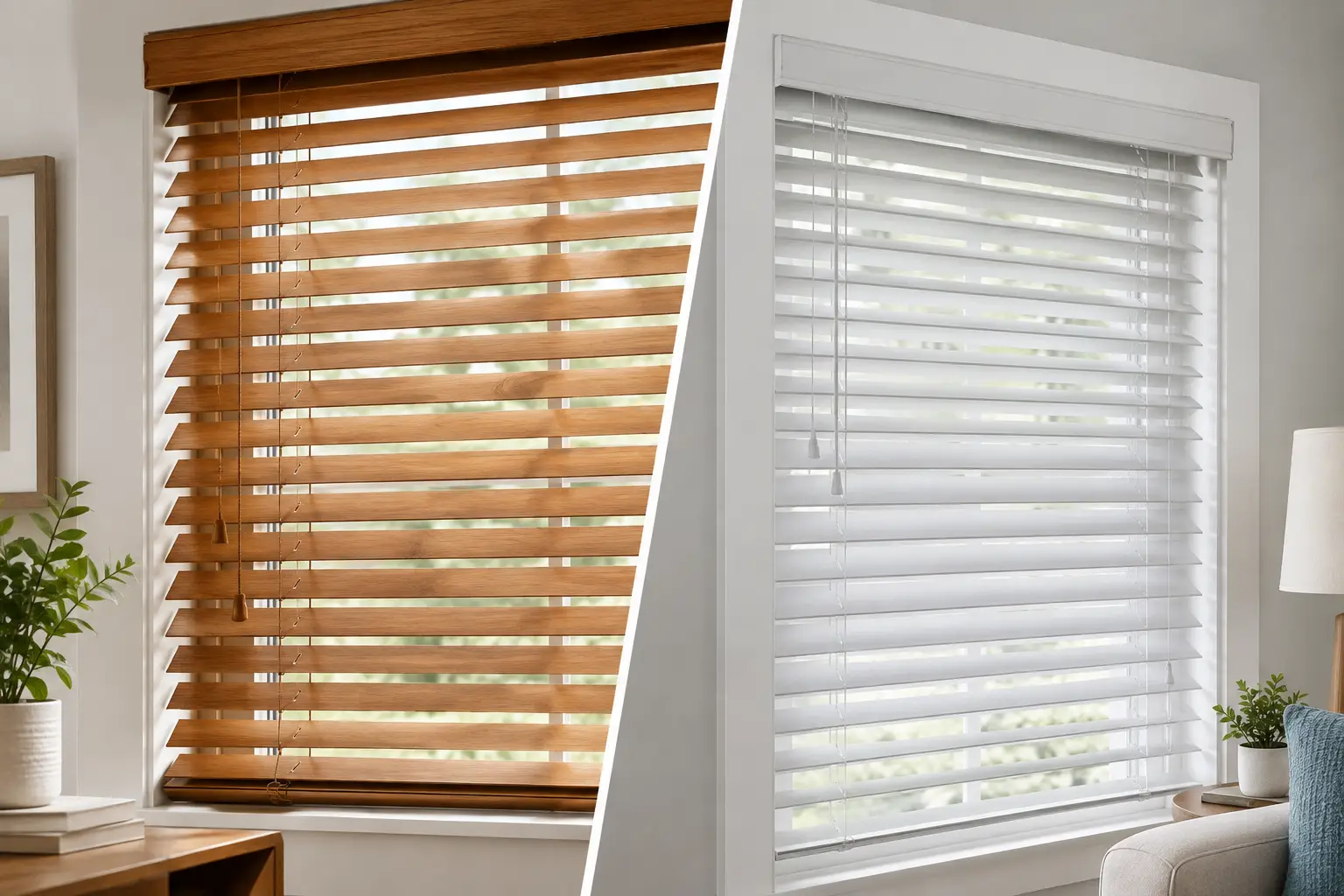
Venetian blinds are a practical choice where you want to fine-tune the light. By tilting the slats, you can direct sunlight away from a screen while still allowing daylight into the room. This is particularly helpful for south-facing or west-facing offices, where glare can build quickly later in the day.
Aluminium Venetian blinds offer a neat, modern finish and are easy to wipe clean. Wooden blinds bring more warmth and can suit a room with natural furniture or flooring. Both can provide privacy without needing to block out every bit of daylight. The trade-off is that slats require occasional dusting, especially in a workspace used every day.
Roller blinds for a clean, simple finish
Roller blinds suit home offices where you prefer an uncluttered look. They sit neatly at the window and are available in a wide range of colours, textures and performance fabrics. A light-filtering fabric can soften harsh sunlight, while a blackout fabric is useful if the room doubles as a guest room or if strong sun makes working difficult.
Blackout does not always mean total darkness around the edges, as this depends on the fitting and the window shape. It is best for controlling direct light, rather than assuming it will create a completely dark room. For screen work, a dim-out or light-filtering option may sometimes be the better balance, as it reduces glare while keeping the space pleasant during daytime hours.
Vertical blinds for wider windows and doors
Vertical blinds work particularly well across wide windows, patio doors and larger glazed areas. Their vertical louvres can be tilted to manage sunlight and privacy, and they can be drawn to one side when you want a clear view outside.
They are a sensible option for a home office connected to a conservatory, garden room or extension. The main consideration is the available space around the opening, as you will want the blind to stack neatly without getting in the way of furniture or regular access.
Perfect Fit and Velux blinds for awkward spaces
If your desk is close to a door or you have tilt-and-turn windows, Perfect Fit blinds can be an excellent solution. They fit within a frame rather than hanging freely, so they move with the door or window. This gives a tidy result and avoids loose cords or fabric moving about when the opening is used.
For loft offices, Velux blinds are designed for roof windows and help make a bright top-floor space easier to use throughout the day. The right fabric can reduce glare, provide privacy and help limit the impact of strong sunlight. Accurate measuring matters particularly here, because roof windows come in a variety of sizes and configurations.
Think about screen position before choosing fabric
A blind can improve glare, but the position of your desk matters too. Where possible, avoid placing a monitor directly in front of or directly behind a window. Light coming from the side is usually easier on your eyes and makes video calls more flattering and consistent.
If the desk must face the window, choose a blind that gives you gradual control. Slatted styles are often useful because you can adjust the angle as the light changes. If the window sits behind you, consider whether reflections will appear on the screen and whether people on video calls can see clearly without the background becoming too bright.
Fabric colour plays a part as well. Very dark fabrics can make a small office feel heavier when fully lowered, while pale fabrics may allow more brightness through. The best choice depends on your room, not just a swatch viewed under showroom lighting. Seeing samples in your own home is a valuable part of getting it right.
Do not overlook heat, insulation and comfort
Windows can make a home office feel too warm in summer and chilly in winter, particularly in rooms with larger areas of glazing. While blinds will not replace proper insulation, they can help manage the feeling of the space by reducing direct sun and adding another layer at the window.
For rooms that become hot in the afternoon, consider a fabric designed to filter solar glare or a blind that can be partly adjusted rather than simply raised or lowered. In cooler rooms, a well-fitted blind can make the window area feel less exposed. The benefit will vary with the glass, window condition and orientation, so it is worth discussing the room itself rather than choosing on appearance alone.
Make safety and everyday use part of the decision
A home office should be straightforward to use, not another job on your to-do list. Think about how often you will adjust the blind, whether the window is hard to reach and whether the room is also used by children or visitors. Mechanical blind options can be helpful for high windows, large spans or situations where you want a cleaner, more convenient operation.
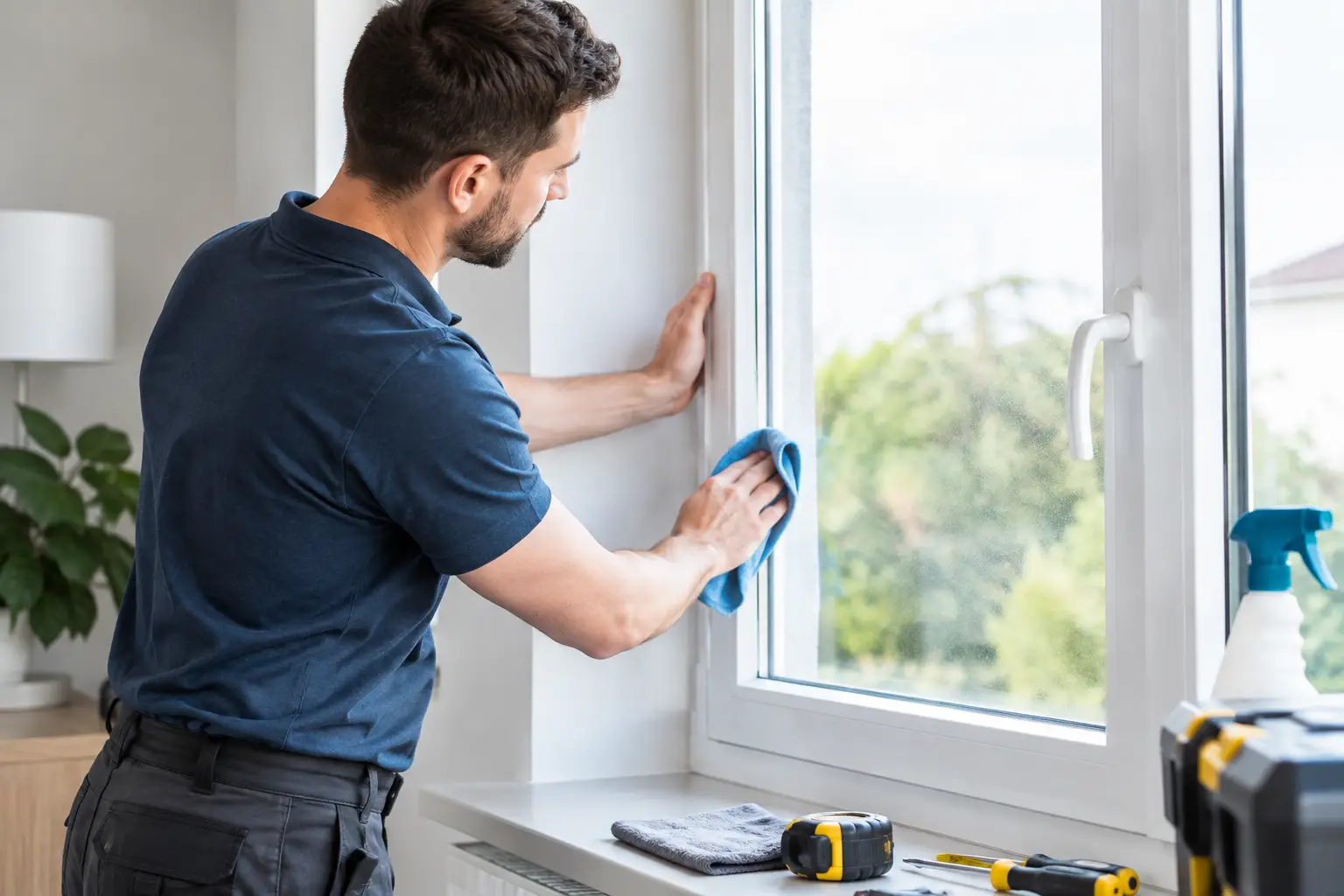
Professional fitting also ensures the blind sits properly, opens and closes as it should, and is installed with appropriate safety considerations. This matters with made-to-measure products, where a few millimetres can affect how neatly a blind fits and performs.
Why made-to-measure fitting makes a difference
Off-the-shelf sizes can be tempting, but home office windows are not always standard. Recess depth, handles, window frames and nearby furniture can all affect the right product and fitting method. A blind that is too narrow can leave unwanted gaps, while one that is too wide may not operate cleanly.
A free home measuring appointment gives you the chance to see materials against your wall colour, assess the daylight at your actual window and ask practical questions before ordering. It also removes the uncertainty of measuring yourself, choosing the wrong fixing or trying to correct a poor fit afterwards.
Premier Welsh Blinds provides this hands-on service for homeowners across Neath, Swansea, Port Talbot, Bridgend and Ammanford, from the first measure through to tidy professional installation and advice on operating your new blinds.
A simple way to choose with confidence
Take a few notes before your appointment: when the sun is strongest, where glare appears, whether privacy is an issue and how you want the room to feel. A photograph of the window and surrounding area can also help when you are comparing styles.
The right blind should support the way you work without demanding attention all day. When it is measured carefully, chosen for your light and fitted properly, your home office becomes a calmer, more comfortable place to get on with the day.