A bright room should feel welcoming, not like somewhere you have to squint through breakfast or reposition your laptop every half-hour. The right way to reduce glare with blinds is not always to block every bit of daylight. It is about softening harsh sun, directing light where you want it and keeping the room comfortable throughout the day.
Glare is especially frustrating in south-facing living rooms, home offices, kitchens, conservatories and rooms with large patio doors. It can wash out a television screen, make video calls uncomfortable and cause fading on furniture and flooring. Made-to-measure blinds give you far more control than a one-size-fits-all solution, particularly where window shapes, recesses and door openings vary.
Why glare changes through the day
Glare is not simply a question of how sunny a room is. The angle of the sun matters just as much. Morning light may strike one side of the house, while low afternoon sun can stream directly across a room that felt perfectly comfortable earlier.
Window direction, nearby buildings, reflective surfaces and the height of your windows all play a part. A blind that works well at midday may need a different setting later on. This is why adjustable products are often the most practical choice for everyday spaces: you can respond to the light without closing the room off completely.
There is also a difference between glare and brightness. Soft, even daylight can make a room feel open. Direct sunlight bouncing from glass, pale worktops or screens is what tends to cause discomfort. Your aim is to filter or redirect that direct light while retaining a pleasant level of natural illumination.
The best blinds to reduce glare with blinds
Different blind styles deal with glare in different ways. The best choice depends on how much control you need, whether you want to preserve a view, and how the room is used.
Venetian blinds for precise light direction
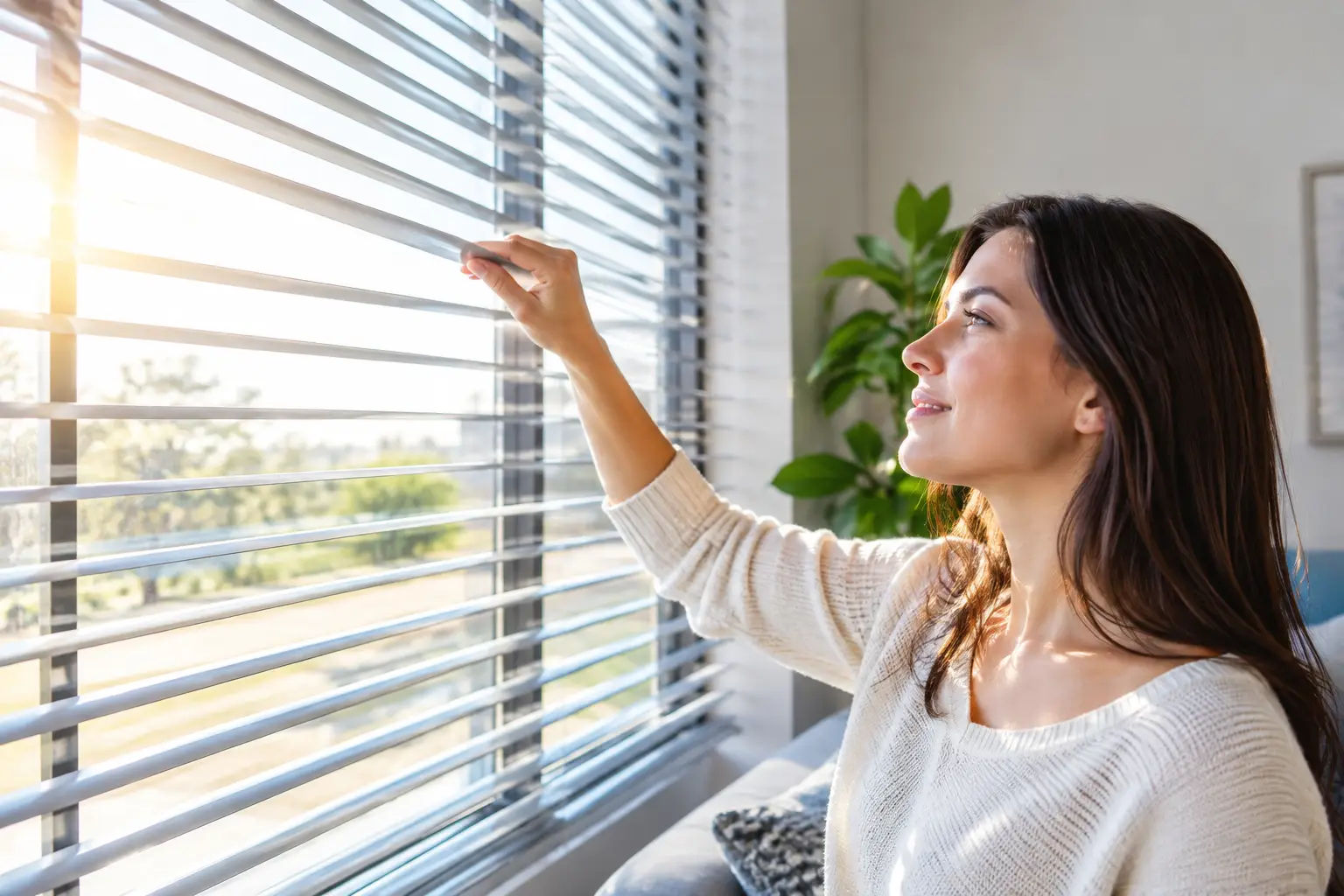
Venetian blinds are one of the most flexible options for rooms where the sun moves across the window. By tilting the slats, you can angle direct daylight upwards or downwards rather than allowing it to hit your eyes, television or desk. You can still let in natural light and retain some privacy, without fully raising the blind.
This makes Venetian blinds particularly useful for home offices, kitchens and lounges. Aluminium versions suit areas that may experience moisture, while wooden blinds can bring a warmer, more traditional finish to living spaces. The trade-off is that slats need occasional dusting, and the best result comes from a blind measured accurately to the window.
Roller blinds for clean, filtered light
Roller blinds offer a neat, simple look and are available in fabrics designed to filter bright light. A light-filtering fabric can take the edge off strong sunshine while allowing the room to remain naturally lit. This works well in rooms where you want to reduce screen glare but do not want a darker, enclosed feel.
For stronger sunlight, a dim-out or blackout fabric provides greater coverage. Blackout roller blinds are a sensible option for bedrooms, media rooms or any space where direct sun is a regular nuisance. They will reduce light more dramatically, so they are less suited to homeowners who want an uninterrupted daytime view.
The fabric colour matters too. Pale shades can keep a room looking light, but a fabric chosen specifically for solar control may perform better against intense glare. During a consultation, it is worth discussing the direction of the window rather than choosing solely by colour.
Vertical blinds for wide windows and doors
Vertical blinds are well suited to larger windows, bay windows and sliding or patio doors. Their individual louvres can be rotated to control the angle of incoming light, which gives you useful adjustment as the sun shifts. They can also be drawn to one side when you want the window fully open.
For busy family spaces, vertical blinds are a practical choice because they cover broad areas efficiently and can be operated without fuss. They are often a good answer where glare is coming through a wide expanse of glass rather than a single standard window.
Perfect Fit blinds for doors and practical spaces
Perfect Fit blinds sit neatly within the frame of compatible windows and doors, moving with the opening rather than swinging freely. That makes them particularly useful on conservatory doors, French doors and tilt-and-turn windows, where a loose blind could get in the way.
They are a strong choice for reducing glare in conservatories and garden rooms. You can adjust the blind for changing sunshine while keeping the door easy to use. As they are fitted closely to the glass, they also give the finished space a tidy, integrated appearance.
Velux blinds for roof windows
Roof windows bring valuable daylight into loft rooms, extensions and converted spaces, but they can also create very direct overhead glare. Velux blinds are designed for these windows and can help filter light, darken a bedroom or make a workspace more comfortable.
Because roof-window sizes and fitting details vary, correct measuring is essential. A made-to-measure solution avoids awkward gaps that let bright light in around the edges and ensures the blind operates properly at height.
Match the blind to how you use the room
Before choosing a fabric or finish, think about the times when glare causes the biggest problem. A desk positioned near a window needs a different solution from a family room where low evening sun affects the television.
For computer use, the priority is often adjustable light control. Venetian or vertical blinds let you alter the slat angle and reduce reflections without working in near-darkness. If the screen is directly opposite the window, a roller blind in a suitable filtering fabric may be more effective at diffusing the light across the whole opening.
In a conservatory, heat and glare commonly arrive together. Perfect Fit blinds can provide flexible coverage on doors and windows, while keeping the space practical for everyday use. In bedrooms, blackout-focused options can offer the stronger light reduction needed for rest, especially during early summer mornings.
Commercial spaces benefit from the same thinking. Offices may need blinds that lower screen glare for staff while still allowing daylight into the room. Durable, easy-to-operate systems are usually the sensible choice where several people will use the space each day.
Small details that make a noticeable difference
A blind can only control glare properly when it fits the window properly. Gaps at the side, top or bottom can leave a sharp strip of sunlight exactly where you do not want it. This is common with ready-made products that are close to the right size but not quite right.
The position of the blind also matters. Recess fitting can create a clean, contained finish where there is enough depth, while face fitting may give better coverage for shallow recesses or windows with obstructions. Door handles, opening directions and nearby furniture should all be considered before fitting.
Operation is another practical detail. A chain, wand or mechanical option should be easy to reach and comfortable to use. If you cannot adjust the blind quickly when the sun appears, you are less likely to get the full benefit from it.
Finally, do not overlook safety and maintenance. A professionally fitted blind should be secure, straightforward to operate and supplied with clear guidance on looking after it. Regular gentle cleaning will keep fabrics fresh and slats working as they should.
A straightforward way to choose the right option
The easiest route is to assess the room in person. Look at the window size, the direction it faces, when sunlight causes problems and whether the window or door needs to open regularly. Then consider the level of privacy, light control and style you want from the finished blind.
A free measuring appointment removes much of the guesswork. You can compare suitable styles and colours in the room itself, see how they will work with the window and receive clear advice before deciding. Professional fitting also means the blind is installed cleanly, securely and to the correct measurements.
Premier Welsh Blinds helps homeowners across Neath, Swansea, Port Talbot, Bridgend and Ammanford choose made-to-measure window coverings that suit their home rather than asking them to compromise around an off-the-shelf size.
If sunlight is making a favourite room harder to use, it is worth addressing it before rearranging the furniture or living with drawn blinds all day. A well-chosen, professionally fitted blind can leave the room bright, comfortable and ready to use whenever the sun is out.