A wide patio door in a Swansea kitchen and a compact bedroom window in Neath may both need better privacy, but they do not necessarily need the same blind. When weighing up roller blinds versus vertical blinds, the best choice usually comes down to the size and direction of the window, how you use the room and the finish you want to achieve.
Both options can be made to measure, look smart and give you everyday control over light and privacy. The difference is in how they operate, how they sit at the window and where each design works best. A professional consultation helps turn a broad choice into a straightforward decision, especially where windows are unusually sized or doors need clear access.
Roller blinds versus vertical blinds: the main difference
A roller blind is made from a single piece of fabric that rolls neatly around a tube at the top of the window. It is raised or lowered to the position you need, creating a clean, uncluttered look. Roller blinds suit many rooms because they are simple to use and available in a wide choice of colours, patterns and performance fabrics.
Vertical blinds are made from individual fabric louvres that hang from a headrail. The louvres can be turned to adjust the light, then drawn to one or both sides to clear the window or door. This makes them particularly practical for wider openings, including patio doors, French doors, conservatories and large office windows.
Neither is automatically the better option. A roller blind is often chosen for a neat, minimal finish on standard windows, while vertical blinds offer more flexible light direction across a broad expanse of glass.
Light control and privacy
Light control is one of the clearest differences between the two styles. With a roller blind, you choose how far up or down the fabric sits. Lower it fully for stronger privacy and reduced daylight, raise it for a clear view, or leave it part way down to soften glare. This straightforward operation works well in bedrooms, bathrooms, kitchens and smaller living-room windows.
The fabric you choose matters as much as the blind type. A blackout roller blind can be a strong choice for bedrooms, nurseries or spaces where early morning light is a problem. A moisture-resistant fabric may be more appropriate near sinks or in bathrooms. For a room that gets bright without needing complete darkness, a light-filtering fabric can reduce glare while keeping the room pleasant and usable.
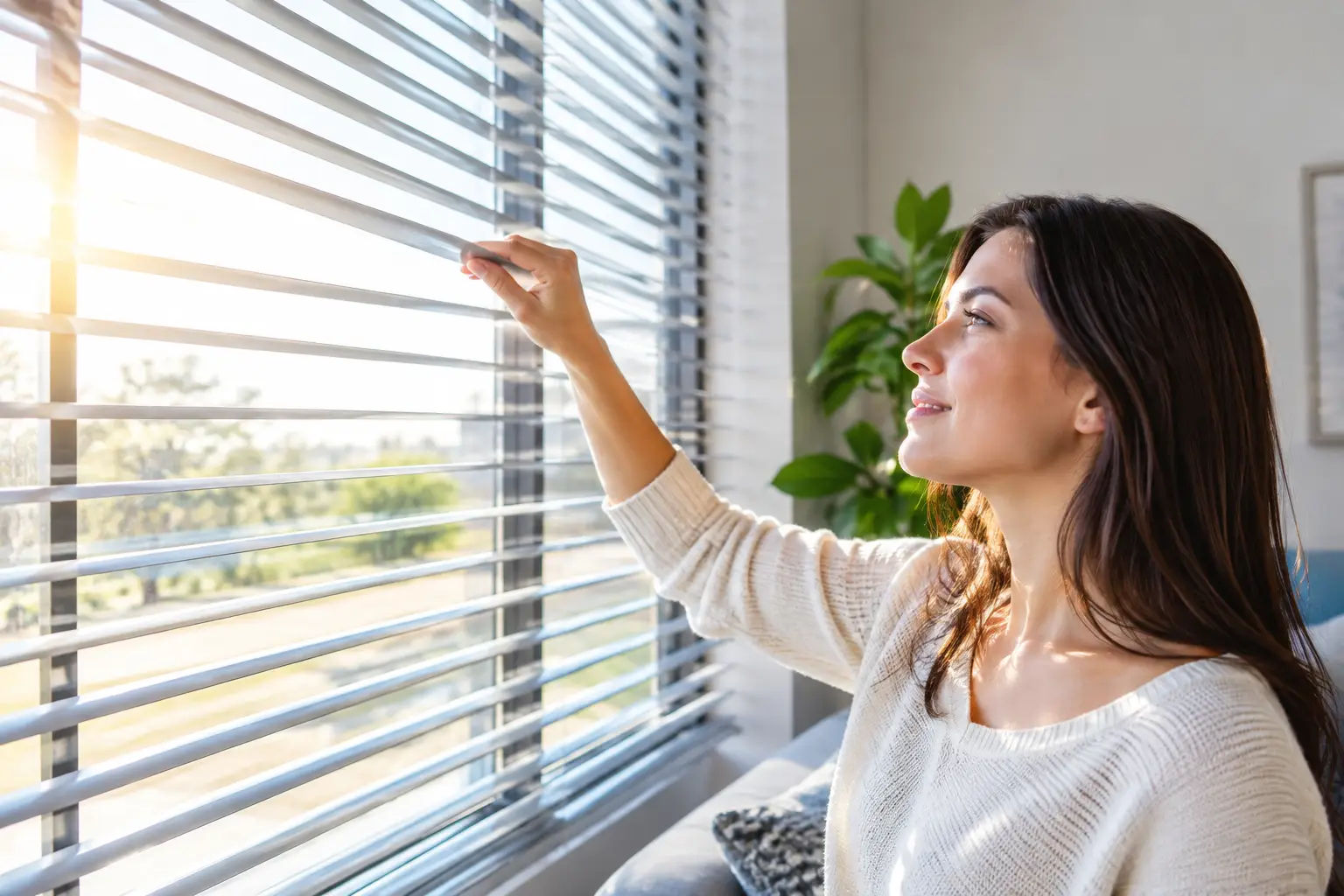
Vertical blinds give you a different kind of control. By tilting the louvres, you can direct daylight away from a television screen, desk or seating area without shutting out all natural light. You can also angle them for privacy while still allowing some brightness into the room. That flexibility is particularly useful on rear-facing doors and large windows where people pass by outside.
For full privacy, the louvres can be closed. However, because vertical blinds have separate sections, a roller blind generally creates a more continuous visual barrier when lowered. If your main requirement is a darker bedroom or a highly private bathroom window, a blackout roller blind may have the advantage.
Which style works best for doors and wide windows?
For sliding patio doors and wide glazed areas, vertical blinds are often the more practical choice. They open sideways rather than lifting upwards, so you can draw them out of the way when you need to use the door. The louvres also follow the tall shape of the opening, giving a balanced, purpose-made appearance.
A roller blind can work well on a door in the right setting, particularly on a narrower single door where the blind can be raised fully before opening it. On a very wide opening, however, the fabric and mechanism may become less convenient than a vertical system. This is where accurate measuring is essential. The blind needs to fit correctly without restricting handles, door movement or everyday access to the garden.
For standard windows, roller blinds are often the simpler visual choice. Their compact top tube and single panel make them especially suitable where you want the window area to feel tidy rather than busy. They can also be fitted within or above a recess depending on the look and coverage required.
Style, colour and the look of the room
Roller blinds tend to suit homes where a clean, contemporary finish is the priority. Their broad fabric panel gives you an opportunity to introduce a subtle texture, a soft neutral shade or a bolder print without adding too much visual detail. They can blend quietly into a freshly decorated room or become a feature in their own right.
Vertical blinds have moved well beyond the plain, office-style designs many people remember. Modern louvres are available in a wide range of colours and fabrics, allowing them to look at home in living spaces as well as workplaces. Their vertical lines can also make a low room feel taller, especially when fitted over a large window or door.
The right choice depends partly on proportion. A small bathroom window may look best with the simple shape of a roller blind. A conservatory wall with several tall panes of glass may benefit from the structure and scale of vertical louvres. Looking at samples in the room is helpful, as colours can appear very different in natural daylight than they do on a screen.
Cleaning and everyday practicality
Both roller and vertical blinds are designed for daily use, but they need slightly different care. Roller blinds are relatively easy to maintain because there is one fabric surface. Regular gentle dusting or vacuuming with a suitable soft attachment can help keep it looking fresh. For marks, follow the fabric care advice rather than using harsh cleaning products.
Vertical blinds need a little more attention because each louvre is cleaned separately. A light dusting often keeps them in good order, and individual louvres can be replaced if one becomes damaged or marked. That can be a useful advantage in busy family homes, commercial spaces or areas close to doors where the blind may receive more wear.
If a room is likely to experience moisture, splashes or frequent cleaning, discuss this during your appointment. The right fabric and fitting position can make a noticeable difference to how well the blind performs over time.
Operation, safety and fitting quality
A blind should feel easy to operate from the first day. Roller blinds can be supplied with suitable control options, while vertical blinds use a wand or chain system to turn and draw the louvres. The best option depends on where the blind is fitted and who will use it.
For homes with young children, blind safety should always be considered as part of the specification. A professional installer can advise on appropriate control and safety solutions, while ensuring everything is fitted securely and neatly.
Made-to-measure fitting also matters for performance. An incorrectly sized roller blind may leave unwanted gaps or sit unevenly. Poorly fitted vertical blinds can catch on handles, hang at the wrong length or fail to stack neatly. Measuring the window, recess, frame, handles and opening direction properly avoids these frustrations before the order is placed.
Making the right choice for your home
Choose roller blinds when you want a streamlined look, straightforward up-and-down operation and the option of specialist fabrics such as blackout or moisture-resistant materials. They are a popular solution for bedrooms, bathrooms, kitchens and individual windows throughout the home.
Choose vertical blinds when you need flexible light direction over a large window, a practical covering for a patio or French door, or a blind that can be drawn to the side for easier access. They are also a dependable option for offices and larger commercial windows.
At Premier Welsh Blinds, the process starts with understanding how you use the room, not simply choosing from a sample book. A free measuring appointment gives you the chance to see suitable materials, talk through practical details and receive clear advice before fitting is arranged. The most satisfying result is a blind that looks right, works smoothly and makes the room easier to enjoy every day.