A loose pull cord can make an otherwise well-finished window feel awkward to use, especially in a busy family home. Cordless blinds offer a neater alternative: they are raised, lowered or tilted without a hanging cord, leaving the window area looking cleaner and easier to manage day to day.
For homes with young children or pets, removing accessible cords can also be an important safety consideration. Yet the appeal goes beyond safety. The right cordless system can make light control feel simpler, complement a modern room and provide a tailored finish for windows, doors, conservatories and garden rooms.
What are cordless blinds?
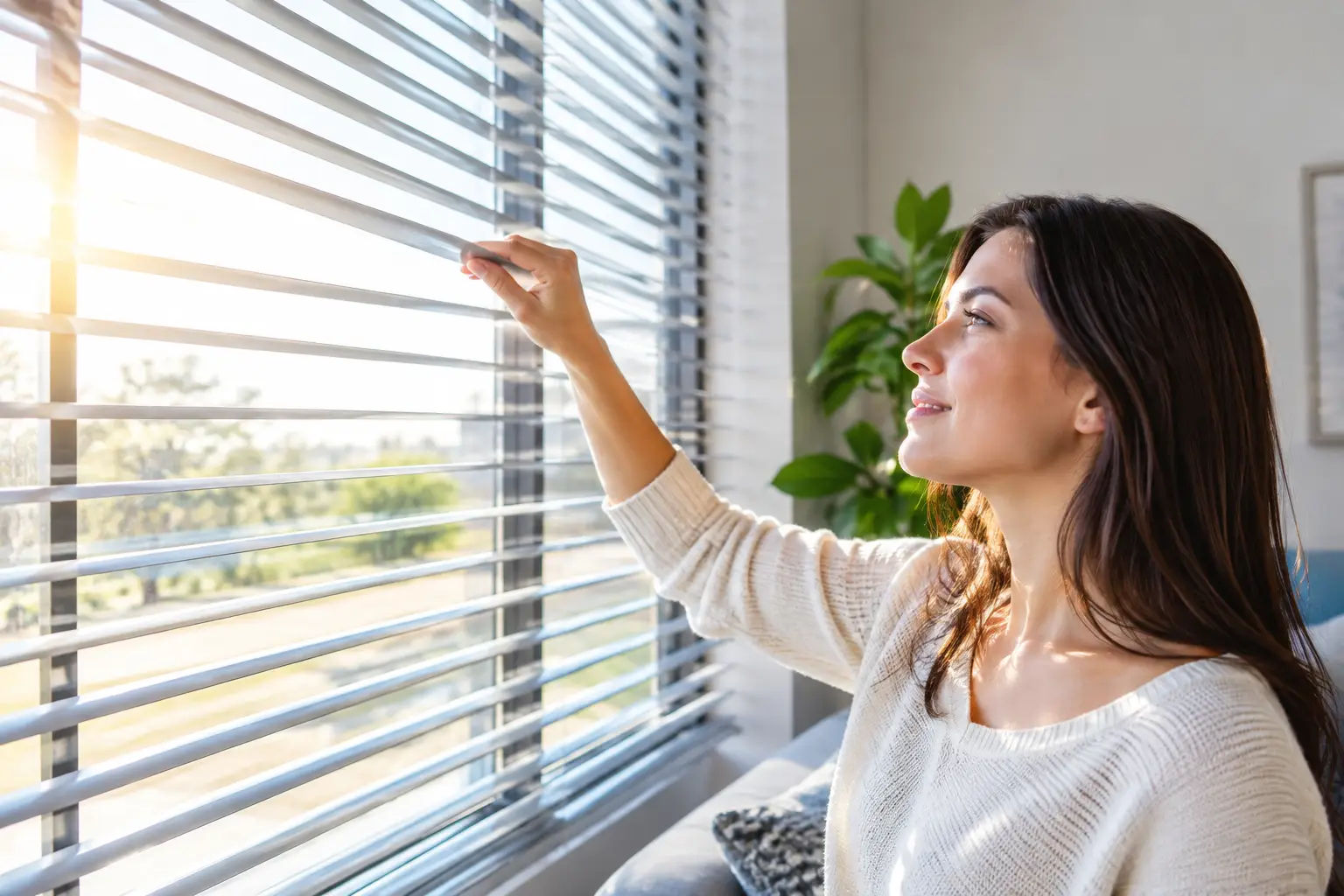
Cordless blinds use an internal operating system rather than an external pull cord. Depending on the style, you may gently lift or lower the bottom rail by hand, use a discreet handle, tilt slats with a wand, or choose a motorised control. The mechanism is built into the blind, so there is less visual clutter around the window.
They are available across several blind styles, including roller, Venetian, wooden and Perfect Fit options. This matters because cordless operation is not a single product with one look. It is a feature that can be matched to the way you use a room and the type of window you have.
A made-to-measure fitting is particularly worthwhile with cordless systems. The blind needs to sit squarely, operate smoothly and have the right tension or mechanism for its size. Accurate measuring also helps avoid gaps that can affect privacy and light control.
Why choose cordless blinds?
The most obvious benefit is a tidier appearance. Without cords hanging at the side of the window, the lines of the blind are cleaner and the surrounding space feels less busy. This suits contemporary interiors, but it is equally useful in traditional homes where you want the window covering to look considered rather than complicated.
Safety is another strong reason to consider a cordless option. Cords can present a risk where small children or pets are present, so reducing or removing them can give greater peace of mind. It is still sensible to discuss the room, window position and intended users when choosing a blind, as the most suitable control method depends on the setting.
Cordless operation can also be more convenient. A bottom rail can be easy to reach at a kitchen or bedroom window, while a motorised system may be a better choice for high, wide or difficult-to-access glazing. The best solution is not always the most advanced one. For a standard window used several times a day, a simple hand-operated blind may be exactly right.
Choosing the right style for each room
Start with what the room needs from its window covering. Light, privacy, moisture, insulation and ease of cleaning all play a part. A good-looking blind that does not suit the room’s daily use can quickly become frustrating.
Bedrooms and nurseries
Bedrooms often benefit from blackout fabrics, particularly where early morning sunlight, street lighting or shift work affects sleep. A cordless blackout roller blind can give the room a calm, uncluttered finish while helping to block unwanted light.
For a nursery or child’s bedroom, cordless operation is especially worth considering. The blind should be fitted securely and selected for the window size, with a control method that is practical for the adults using the room. A professional consultation makes it easier to balance safety, blackout performance and appearance without guesswork.
Kitchens and bathrooms
Moisture and everyday cleaning are the priorities here. Aluminium Venetian blinds are often a practical choice because their slats allow you to adjust light and privacy precisely, while roller blind fabrics can provide a softer, simpler look where suitable for the environment.
A cordless design keeps the operating area clear of splashes and reduces dangling parts near worktops or sinks. For bathroom windows, consider how the blind will cope with humidity and whether privacy is needed throughout the day or only at certain times.
Living rooms and home offices
In living spaces, control is often more important than complete darkness. Venetian blinds allow you to angle the slats to soften glare while keeping daylight in the room. Wooden blinds can add warmth and definition, while a roller blind offers a streamlined finish for a more understated scheme.
For a home office, think about screen glare at different times of day. A blind that can be adjusted in small increments may be more useful than one that simply opens or closes. If the window is behind a desk, cordless operation can also make reaching and using the blind less awkward.
Conservatories, doors and shaped glazing
Windows and doors in conservatories and garden rooms can be exposed to strong sun, changing temperatures and frequent use. Perfect Fit blinds are designed to sit neatly within compatible window and door frames, making them a popular option where free-hanging fabric would be impractical.
For very large windows, skylights or high-level glazing, motorised operation may offer the most comfortable solution. It can be selected for convenience rather than novelty, allowing you to control light without stretching over furniture or using a pole. The right product will depend on the glazing, access and how often the blind is adjusted.
Cordless, motorised or wand-operated?
These options are sometimes grouped together, but they work differently. A cordless blind is commonly moved by lifting or lowering the rail or using a handle. It suits many standard-sized windows and gives a minimalist result.
Motorised blinds use an electric control system, often operated by a remote or wall control. They are useful for hard-to-reach areas and can be a sensible choice where several blinds need to be adjusted regularly. They do require consideration of power supply, charging arrangements and the location of the controls.
Wand-operated Venetian blinds remove looped cords while retaining simple manual adjustment. The wand is used to tilt the slats, and the blind may have a separate safe lifting arrangement depending on its design. This can be a practical middle ground when you want accurate light control without the cost of motorisation.
There is no one-size-fits-all answer. The most suitable option depends on the blind style, the dimensions of the window, who will use it and the room’s purpose.
Why professional measuring makes a difference
Cordless mechanisms rely on precise sizing and correct installation. A blind that is too wide, too narrow or fitted out of level may not operate as it should, and even small measuring errors can spoil the finished look.
A home consultation allows measurements to be taken properly and gives you the chance to see samples in your own light. Colours, fabrics and wood finishes often look different at home than they do under showroom lighting. It is also the right time to discuss privacy, blackout requirements, window handles, door clearance and whether a recess or face fitting will work best.
With Premier Welsh Blinds, the process begins with free measuring and clear product guidance, followed by a quotation and a fitting arranged around you. A professional installation means the blind is secured carefully, checked for smooth operation and explained before the team leaves. It also removes the uncertainty of ordering a standard size and hoping it fits.
Looking after your cordless blind
Most cordless blinds need very little maintenance. Regularly dust slats with a soft cloth or brush attachment, and wipe suitable surfaces with a lightly damp cloth. Avoid harsh cleaners, particularly on wooden finishes, fabrics and mechanism components.
Operate the blind gently and evenly, using the handle or bottom rail as intended. Pulling at one side can put unnecessary strain on the mechanism. If a blind starts to stick, sits unevenly or does not hold its position, avoid forcing it. A quick check can often identify whether an adjustment is needed before a minor issue becomes more difficult.
The best cordless blind is one that suits the people using the room as much as the room itself. Choose a style you will enjoy operating every day, and a made-to-measure fitting will ensure it looks as though it has always belonged at the window.