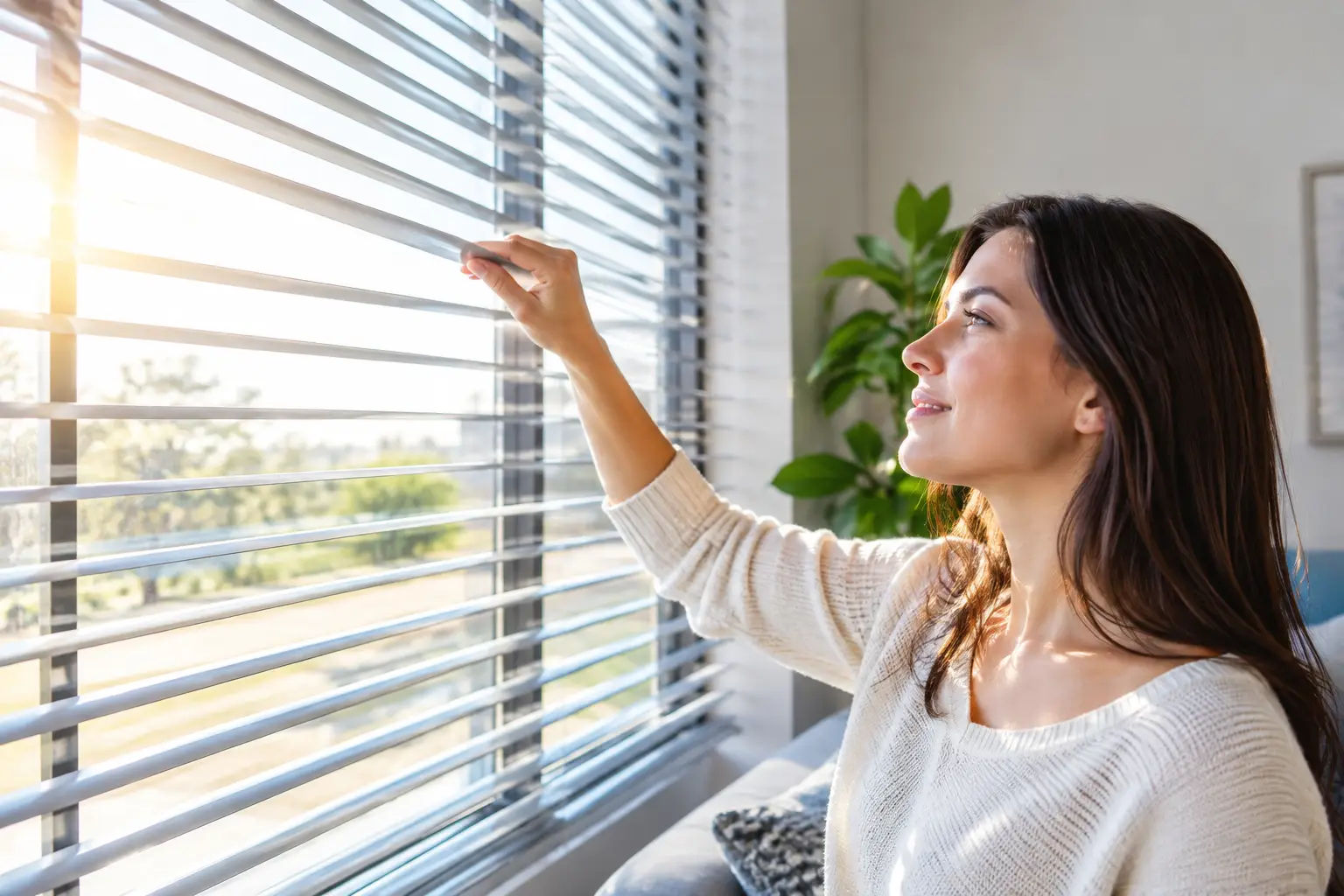
A large window should make a room feel brighter and more open, not leave you struggling with glare, privacy or an awkward off-the-shelf fit. The best large window blind styles balance practical day-to-day control with a finish that suits the room. That might mean softening strong afternoon sun in a lounge, covering wide patio doors without getting in the way, or making a garden room more comfortable throughout the year.
For wide glazing, measurement matters as much as the style itself. A blind that looks right in a showroom can feel too heavy, bow in the middle or leave unwanted gaps if it has not been specified for the window. A made-to-measure consultation gives you the chance to see what will work with the size, opening direction and use of your space before anything is fitted.
What large window blind styles need to do
Large windows ask more of a window covering than smaller ones. There is more light to manage, a bigger area to keep private and usually a more noticeable visual impact. The right choice depends on whether your priority is a clear view, flexible light control, warmth, blackout performance or easy access through a door.
Think about how the window is used at different times of day. A south-facing room may need reliable protection from bright sunlight, while a street-facing bay may need privacy without making the room feel closed in. In a kitchen, dining area or garden room, wipe-clean materials and straightforward operation can be just as important as appearance.
It is also worth considering the scale of the blind. Wide windows can make narrow slats or a busy pattern appear fussy, while a simple, well-proportioned design often looks more considered. Your chosen colour can either blend into the window frame for a calm finish or add definition to the room.
Large window blind styles worth considering
Vertical blinds for wide windows and doors
Vertical blinds remain one of the most practical choices for broad windows, sliding doors and patio doors. Their individual louvres can be tilted to direct daylight away from screens or seating, then drawn to one side when you want the window clear. This makes them particularly useful where people regularly pass in and out.
They are available in a wide range of fabrics and colours, from subtle neutrals to more distinctive shades. A light-filtering fabric can take the harshness out of daylight, while blackout options are better suited to bedrooms or rooms where you need a darker environment.
The trade-off is that vertical blinds have a more linear, functional look than some other options. They work especially well when access and adjustable light control are the main priorities.
Roller blinds for a clean, uncluttered finish
Roller blinds suit large windows where you want a simple, modern appearance. When raised, they sit neatly at the top of the window and leave the glazing open. When lowered, a single expanse of fabric creates a tidy, consistent finish.
For very wide windows, the fabric, bracket position and operating mechanism need careful planning. In some cases, two or more coordinated roller blinds provide better control and a neater result than one exceptionally wide blind. This also lets you shade one side of the room while keeping daylight on the other.
Roller blinds are a strong choice for kitchens, bathrooms, home offices and contemporary living spaces. Moisture-resistant and wipe-clean fabrics are useful in practical rooms, while blackout fabrics can help control early morning light. Bear in mind that a roller blind generally offers less precise adjustment than a louvred blind. It is either raised, lowered or positioned somewhere in between.
Venetian blinds for adjustable light control
Venetian blinds are ideal when you want to manage light without fully covering the window. By adjusting the slats, you can reduce glare and improve privacy while still allowing daylight into the room. This is useful in offices, lounges and windows that receive direct sun for much of the day.
Aluminium Venetian blinds offer a crisp, contemporary look and are easy to maintain. They can be a sensible option in kitchens and workspaces, where practicality matters. For larger widths, high-quality components and accurate fitting are important so the blind operates smoothly and sits evenly.
Venetian blinds can look more detailed than a roller blind, so they tend to suit rooms where that texture complements the overall style. They are also worth considering if the view is important, as the slats can be opened widely rather than lifting the blind completely.
Wooden blinds for warmth and character
Wooden blinds bring a warmer, more substantial feel to a large window. Their wider slats can look particularly balanced against broad glazing, bay windows and larger rooms. Tilted slats give you privacy and shade while retaining a sense of depth and natural texture.
They are well suited to lounges, dining rooms and home offices, especially where timber furniture, natural flooring or neutral interiors are already part of the scheme. Faux wood alternatives can offer a similar appearance with added practicality in rooms that experience moisture or changing temperatures.
Because wooden blinds have more weight than lightweight fabric options, professional measuring and fitting are especially valuable on wide windows. The support, headrail and controls need to be right for the size, helping the blind remain reliable and easy to use.
Shutters for a fitted, long-term finish
For homeowners looking for a more architectural finish, shutters can be an excellent option for large windows. They are fitted to the window area and use adjustable louvres to control privacy and daylight. Full-height shutters can make a feature of a bay or large front window, while tracked systems can suit wide door openings.
Shutters offer a solid, tailored appearance and can help a room feel more private and settled. They are often chosen for living rooms, bedrooms and street-facing spaces where the window covering needs to look good from both inside and out.
They are a larger investment than many blind types, and their configuration needs to suit the way your windows open. However, where the style and budget are right, shutters can provide a durable finish that feels built into the room rather than added afterwards.
Choose the operation as carefully as the fabric or slat
On a large blind, the control system makes a real difference. A wide blind that is awkward to raise or tilt soon becomes frustrating, even if it looks good. Chain-operated systems are familiar and practical, while mechanical or motorised options can make larger and harder-to-reach windows easier to manage.
Motorised blinds can be particularly helpful for tall glazing, conservatories and windows behind furniture. They also allow you to make quick adjustments when the sun moves around the room. The best option depends on the blind type, window size and how often you expect to use it.
Safety is another reason to discuss operation during a home visit. The right control arrangement can keep the finished blind tidy and suitable for the people using the room.
Why made-to-measure fitting matters on wide glazing
Large windows make small measuring errors far more obvious. A few millimetres can affect how a blind sits, whether it clears handles and whether light escapes around the edges. Window recesses are not always perfectly square either, particularly in older properties.
A professional survey looks beyond the width and drop. It considers the depth of the recess, opening handles, door movement, nearby radiators and whether the blind should sit inside or outside the recess. It also gives you a chance to compare samples in your own light, alongside your existing décor.
Premier Welsh Blinds provides free measuring and product guidance, followed by a clear quotation and insured fitting. For customers in Neath, Swansea, Port Talbot, Bridgend and Ammanford, this removes the uncertainty of ordering a wide blind online and hoping it will fit.
Make the choice around how you live
There is no single best answer for every large window. Vertical blinds may be the sensible choice for a busy patio door, while wooden blinds could give a lounge the character it is missing. A roller blind may suit a bright kitchen perfectly, and shutters may be the right finishing touch for a prominent bay.
Bring a few priorities to your consultation: how much privacy you need, when the sun causes problems, whether the window opens regularly and the look you want to achieve. From there, the right style becomes much easier to narrow down, and a carefully fitted blind can make that large window one of the best features in the room.